
Spinellus
Spinellus
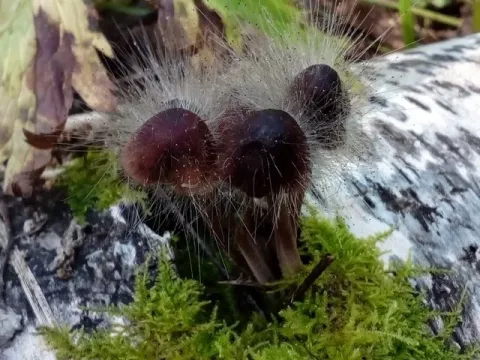
Spinellus is a genus of fungi belonging to the division Zygomycota. These fungi are specialized obligate parasites that grow on the fruiting bodies of various Agaricales mushrooms.
What the section contains
Spinellus
The most widely studied species is Spinellus fusiger. This organism functions by penetrating the mushroom host with its mycelium, which extracts essential nutrients required for the parasite's rapid development.
The life cycle is characterized by quick colonization of the host tissue. Once established, the fungus produces long, branched sporangiophores that grow vertically above the host surface.
Asexual reproduction is primary, involving the production of numerous spores within sporangia. These spores are released into the environment and dispersed by wind or insects to find new hosts.
As a zygomycete, Spinellus has a unique physiological structure that allows it to thrive in high-humidity microclimates typical of forest floors and mushroom farms.
The most distinct sign of Spinellus infection is a dense, cotton-like white mold covering the surface of the mushroom cap. This growth is often described as "fluffy" or "hairy."
As the infection progresses, the surface of the host mushroom becomes increasingly covered with delicate, thin sporangiophores that resemble tiny needles or bristles.
The infected tissue of the host mushroom loses its original texture, becoming soft, watery, and eventually collapsing under the weight of the parasitic mycelium.
During the maturation phase, the mold changes color from white to grey or dark brown, signifying the mass production and release of dark-colored spores from the sporangia.
Eventually, the entire fruiting body of the mushroom is consumed and replaced by the parasitic mold, making the host unrecognizable and biologically inactive.
High humidity and moisture are the most critical factors for the survival and spread of Spinellus. It flourishes in environments where the air is consistently saturated with water vapor.
Moderate temperatures ranging between 15°C and 25°C provide the optimal metabolic pace for the fungus to propagate and infect new hosts within a short time frame.
Poor ventilation in enclosed growing spaces or dense vegetation in forests traps moisture and spores, creating an ideal environment for rapid disease transmission.
The presence of over-mature or already stressed mushrooms provides an easy entry point for the parasite, as the host's immune mechanisms are typically weakened at these stages.
Environmental fluctuations, such as sudden shifts in humidity, may also trigger the release of spores, exacerbating the spread of the fungus across a local area.
The primary harm caused by Spinellus is the destruction of reproductive structures in mushroom populations, which directly reduces the proliferation of the host species.
In forest ecosystems, this parasite can disrupt local mycological diversity by outcompeting or damaging specific mushroom species that are essential for the ecosystem's health.
For commercial mushroom production, an outbreak of Spinellus is economically damaging, as infected mushrooms are discarded due to their ruined quality and appearance.
The fungus accelerates the decomposition of organic matter, which alters the nutrient cycling rate in the soil environment where the mushrooms grow.
While not a direct threat to vascular plants, the presence of Spinellus serves as an indicator of an overly humid, stagnant environment that might require management in controlled settings.
Effective control of Spinellus begins with rigorous sanitary measures. In mushroom cultivation, surfaces must be kept clean to prevent the accumulation of spores.
Improving air circulation and maintaining proper humidity levels within growing facilities are the most effective ways to inhibit the growth of this zygomycete.
Promptly removing and disposing of infected fruiting bodies is essential to prevent the parasite from spreading to healthy mushrooms nearby.
The use of sterilized substrates and high-quality spawn reduces the probability of introducing the parasite into the growing environment from the very beginning.
Regular inspections and monitoring of the growing area allow for the early detection of localized outbreaks, enabling the immediate removal of infected specimens before they release spores.