
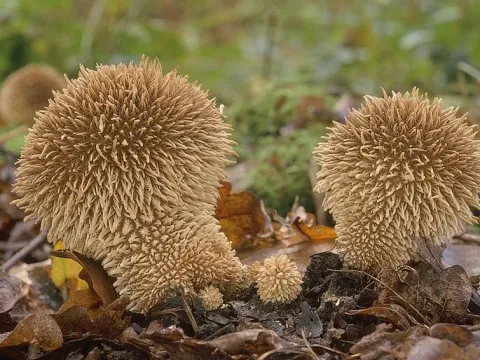
Spiny puffball
Lycoperdon echinatum
It is important to clarify that Lycoperdon echinatum is not a plant disease or a pathogenic agent for crops.
What the section contains
Spiny puffball
This species is a saprotrophic fungus belonging to the Agaricaceae family that plays a crucial role in ecological nutrient cycling.
The fungus feeds exclusively on decaying organic matter, such as leaf litter and woody debris found on forest floors.
It does not infect living plant tissues, nor does it interfere with the physiological processes of agricultural crops.
Biologically, it acts as a decomposer, breaking down complex organic compounds into simpler forms available for plants.
The spiny puffball thrives in damp and shaded environments, typically found in deciduous and mixed woodlands.
A stable microclimate with high air humidity and moist soil is ideal for the development of its fruit bodies.
It prefers habitats with deep layers of humus-rich soil and abundant leaf mulch.
Growth is most active during periods of frequent rainfall and moderate temperatures between 15°C and 22°C.
Soil compaction and low organic content in the soil are unfavorable factors for the proliferation of this fungus.
There is no evidence of harm associated with this species in agricultural or horticultural settings.
Since it is a saprotroph and not a parasite, it poses zero threat to the health of trees, vegetables, or field crops.
It does not produce metabolites that cause necrosis, chlorosis, or other symptoms commonly associated with plant diseases.
The presence of this fungus is often a positive indicator of high soil biological activity and organic richness.
Therefore, it should not be categorized as an object of concern for plant protection programs.
No control measures are necessary for the spiny puffball as it is a non-harmful component of the environment.
The application of fungicides against this fungus is inappropriate and may cause unnecessary ecological disruption to the soil microbiome.
If its presence is undesirable in managed landscapes, simple mechanical removal of the organic debris it feeds on is sufficient.
Maintaining proper soil drainage and adequate sunlight exposure can naturally limit the environmental conditions favorable to its growth.
Preventive agricultural practices should focus on maintaining healthy soil structure rather than removing beneficial saprotrophic organisms.