
Spinellus fusiger
Spinellus fusiger
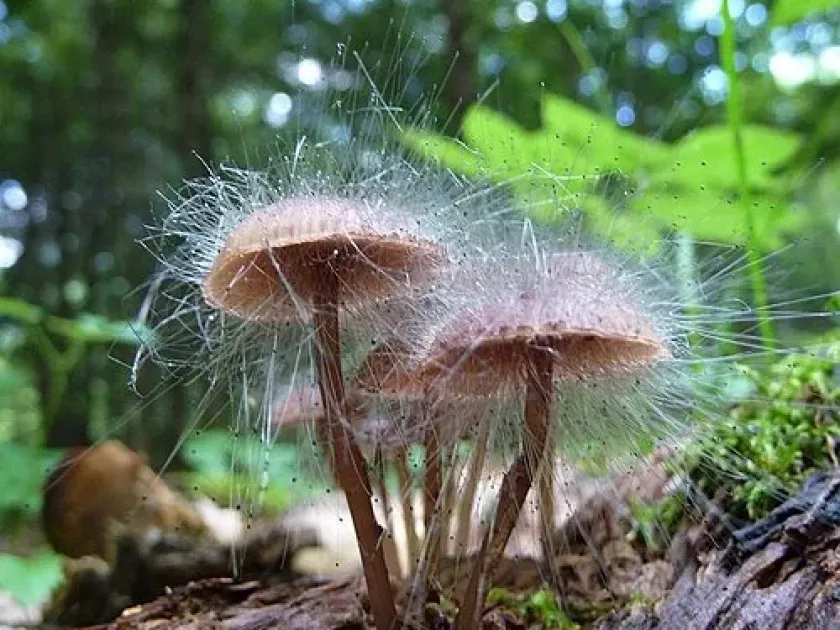
Description
Symptoms
Infection typically presents as a dense, grayish to brownish filamentous growth covering the pileus (cap) and stipe (stem) of the host.
As the infection matures, the fungal growth turns dark, almost black, due to the massive development of mature sporangia, creating a spiked appearance.
The host tissues quickly lose their structural integrity, becoming soft and pulpy as the pathogen enzymatic degradation proceeds.
Signs often appear first on the hymenium (underside of the cap), which can lead to late detection during the early stages of the disease.
Advanced stages of colonization result in the complete collapse of the mushroom, which then emits a characteristic stale or musty odor.
Pathogen
Spinellus fusiger is a zygomycete fungus belonging to the order Mucorales, acting as a specialized parasite on various agaric mushrooms.
The organism functions by invading the host's tissue with its mycelium, which absorbs nutrients and disrupts the integrity of the host's fruit body.
Its life cycle involves the formation of long, branched sporangiophores that emerge vertically from the host, facilitating wide dispersal of spores by wind.
The fungus is highly adapted to parasitizing gilled mushrooms and can reproduce both sexually via zygospores and asexually through sporangiospores.
It is classified as an obligate parasite in many contexts, meaning it relies heavily on the presence of suitable host fungi for its continued survival.
Conditions for development
High relative humidity levels, typically between 85% and 95%, are essential for the rapid germination and growth of Spinellus fusiger.
The pathogen thrives in temperate climates with optimal growth temperatures ranging from 15 to 22 degrees Celsius (59–72 degrees Fahrenheit).
Poor ventilation in forest undergrowth or indoor mushroom growing chambers significantly increases the risk of successful spore colonization.
Surface moisture on mushroom caps, caused by dew, rain, or high humidity, is a prerequisite for the pathogen to penetrate the host epidermis.
Shaded environments with minimal direct sunlight are preferred by the fungus, as ultraviolet radiation can be detrimental to spore viability.
Why it matters
The primary damage caused by Spinellus fusiger is the total loss of biological and commercial viability of the affected mushroom crops.
In commercial mushroom production, the pathogen can cause significant economic losses by ruining production cycles and contaminating equipment.
Infected fungi lose all nutritional value and may develop metabolic byproducts that are potentially toxic if ingested by humans.
The airborne nature of the spores makes it extremely difficult to isolate the infection once it has reached the sporulation stage in a facility.
Persistent presence of the fungus in the environment can necessitate the total sterilization or replacement of the growth substrate.
Protection
Strict sanitation protocols, including the prompt removal of infected mushrooms and debris, are the most effective way to manage the disease.
Optimizing airflow and reducing surface moisture are critical preventive strategies for indoor cultivation to inhibit spore germination.
Regular monitoring of the growing area helps identify early stages of infection, allowing for the immediate removal of symptomatic hosts.
Disinfection of production rooms using appropriate chemical agents helps to reduce the background load of spores and prevent spread.
Implementing a rigorous quality control program for inputs and substrates minimizes the risk of introducing the pathogen into clean facilities.
Discussion
No discussions yet — be the first.