
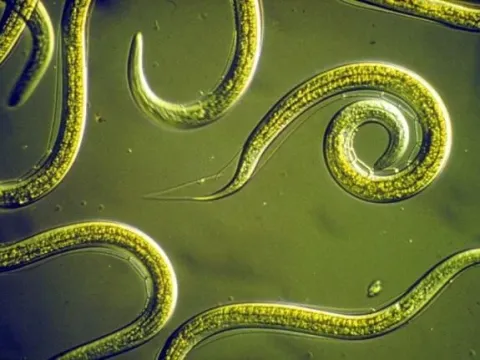
Spiral nematode
Helicotylenchus microlobus
Symptoms of infestation by the spiral nematode often manifest as general plant weakness, which can easily be mistaken for nutrient deficiencies or water stress. The affected plants frequently appear stunted and exhibit reduced vegetative growth.
What the section contains
Spiral nematode
The root system is the primary target, showing necrotic lesions and discoloration. Unlike root-knot nematodes, this species does not typically cause the formation of characteristic galls, making field identification more challenging.
In various crops, such as sunflowers or watermelons, the aerial parts show chlorosis and signs of wilting during the hottest parts of the day. This stress leads to reduced flower formation and poor overall plant health.
Infestations typically appear in patches across the field. Over time, if left untreated, these patches expand, significantly reducing the density and uniformity of the crop stands.
The list of host crops includes:
- Peanut
- Oat
- Watermelon
- Sunflower
- Jerusalem artichoke
- Lettuce
- Sweetgum
- Tobacco
The causal agent is Helicotylenchus microlobus, a microscopic ectoparasitic nematode within the Hoplolaimidae family. It resides in the soil around the roots, feeding on the outer layers of the plant's root system.
The term "spiral nematode" is derived from the characteristic spiral shape these worms adopt when they are in a resting state. This morphological trait is key to their identification under microscopic analysis.
The life cycle encompasses several stages: eggs, four larval stages, and the adult stage. The nematodes move through the soil profile, seeking out susceptible roots to penetrate or feed on the surface tissues.
Dissemination occurs primarily through the movement of contaminated soil. Agricultural machinery, contaminated seeds, and water runoff play significant roles in the spread of this pest across fields and regions.
Their ability to survive in a wide range of soil conditions, combined with a broad host range, makes them resilient pathogens capable of persisting in fields for extended periods.
The optimal development of Helicotylenchus microlobus is favored by warm soil temperatures and adequate soil moisture. These environmental factors directly influence the activity and reproductive rate of the nematode populations.
Well-aerated soils with high organic matter content provide an ideal habitat. In such conditions, nematodes can move more effectively to find host roots and maximize their feeding potential.
Periods of extreme drought or unfavorable temperatures often force the nematodes into a state of dormancy. They can remain in this state until environmental conditions improve, allowing them to resume their parasitic life cycle.
Monoculture systems or rotations involving highly susceptible crops promote the rapid buildup of nematode populations. High population densities increase the risk of severe crop failure in subsequent seasons.
Soil microbial balance is a crucial factor. In soils where beneficial microorganisms are scarce, the spiral nematode encounters less competition and biological resistance, leading to higher damage levels.
The primary harm is the physical damage to root hairs, which impairs the plant's ability to uptake water and nutrients. This deficiency results in lower biomass and significantly reduced harvest yields.
The lesions created by the feeding nematodes serve as entry points for secondary pathogens, such as fungi and bacteria. This frequently results in root rot and vascular wilt, further weakening the plant.
Economic losses arise from both reduced quantity and lower quality of the harvest. For example, oil crops like sunflowers may show reduced oil content, while marketability of vegetable crops decreases due to poor size.
The presence of high nematode populations can render land unsuitable for sensitive crops, necessitating costly soil treatments or a shift in the entire crop rotation strategy to manage the pest density.
Continuous damage affects the physiological resilience of the crop, making it more vulnerable to secondary stressors like extreme heat, low fertility, or drought conditions.
Cultural practices form the backbone of management. A well-planned crop rotation strategy that includes non-host or antagonistic crops is essential for breaking the nematode life cycle and reducing soil populations.
Deep plowing can help disrupt nematode habitats and expose them to drying conditions. Weed control is equally important, as many weeds act as alternative hosts that sustain populations between main crop cycles.
Strict hygiene measures for agricultural equipment are necessary. Cleaning machinery after use in infested areas is critical to prevent the transfer of soil and nematodes to "clean" fields.
Biological control agents, such as beneficial fungi (e.g., Trichoderma species), can be used to suppress nematode populations naturally. These agents help restore soil health and increase plant resistance.
Chemical control with nematicides is generally used as a last resort. Application should be based on prior soil analysis to confirm the threshold levels of the pathogen and ensure that the intervention is both effective and environmentally sound.