
Setomelanomma
Setomelanomma
The disease is caused by the fungus Setomelanomma, a member of the Ascomycota phylum. It acts as a specialized pathogen that primarily infects woody plants and shrubs in various environments.
What the section contains
Setomelanomma
The fungus functions as a parasite, invading the epidermis and cortical tissues of the host. By infiltrating the vascular system, the mycelium disrupts the transport of nutrients and water within the plant.
Biological survival of the pathogen is facilitated by its ability to remain dormant in plant debris or bark during unfavorable weather. This reservoir allows the fungus to persist from one season to the next.
Spore production is a key feature of its life cycle, allowing the pathogen to disperse effectively. Wind, splashing rain, and even insects play a role in spreading the infection to healthy plants.
Genetic diversity within the Setomelanomma genus allows it to adapt to different host species. Understanding its biological traits is crucial for scientists working on long-term disease resistance.
Initial symptoms are often observed as localized necrotic spots or lesions on the bark. Over time, these spots darken and may merge to cover larger areas of the stem or branch.
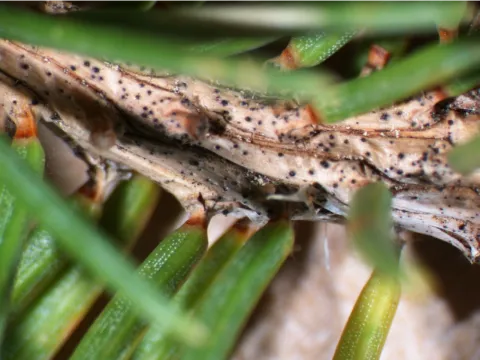
Characteristic fruiting bodies appear as small, black, eruptive bumps on the infected surface. This gives the bark a rough, unhealthy appearance that is easily distinguishable from normal plant growth.
Premature leaf yellowing and wilting are classic signs of systemic stress. As the vascular tissue fails, the parts of the plant distal to the infection begin to die back.
Peeling back the affected bark often reveals discolored, decaying wood underneath. This indicates that the fungus has deeply penetrated the plant's structure, causing irreversible damage.
In severe cases, the entire limb may dry out and die. If left unchecked, the infection can progress from minor branch damage to the complete decline of the host organism.
High humidity and moderate temperatures provide the most conducive environment for Setomelanomma growth. Moisture on the surface of the plant is necessary for spore germination.
Poor aeration in dense plantings significantly contributes to the spread of the disease. When air cannot circulate, humidity levels remain elevated, allowing the pathogen to flourish.
Environmental stress, such as prolonged drought or physical damage from frost, makes plants much more susceptible. Healthy plants are often able to defend themselves against low-level infections.
Seasons with frequent rainfall act as the primary catalyst for infection. During these times, the distribution of spores increases, leading to a spike in new cases across the orchard.
The presence of dead or dying branches is a major risk factor. These areas lack active defense mechanisms and serve as a breeding ground for the pathogen before it attacks healthy wood.
The economic impact of Setomelanomma is seen in the loss of plant vigor and reduced yield. For orchards and nurseries, this means decreased quality and stunted growth of stock.
By compromising the internal transport system, the fungus limits the plant's ability to produce quality fruits or flowers. This translates to direct loss in harvest value.
Plants affected by the fungus become more susceptible to secondary stressors like wood-boring insects or other diseases. This leads to a rapid decline in the plant's total lifespan.
In forest or nursery settings, outbreaks can lead to the widespread destruction of saplings. This creates a significant logistical burden for managers who must remove and destroy infected material.
Ultimately, the harm caused by Setomelanomma is cumulative. Without intervention, it degrades the health of the entire plant community over a period of several growing seasons.
The most effective strategy is the immediate removal of all symptomatic wood. Pruning tools must be disinfected frequently to prevent transferring spores to healthy parts of the plant.
Preventative fungicide applications, particularly those containing copper, can help protect plants during the high-risk, humid growing season.
Cultural practices such as proper spacing and crown thinning are vital. These methods improve airflow and ensure that foliage and branches dry quickly after rain.
Providing optimal water and nutrient levels helps maintain the plant's natural immunity. A well-nourished plant is more resilient to the initial stages of a fungal attack.
Frequent monitoring and early detection allow for localized control. By addressing individual spots of infection before they spread, growers can avoid large-scale loss of their crops.