
Setomelanomma holmii
Setomelanomma holmii
Description
Symptoms
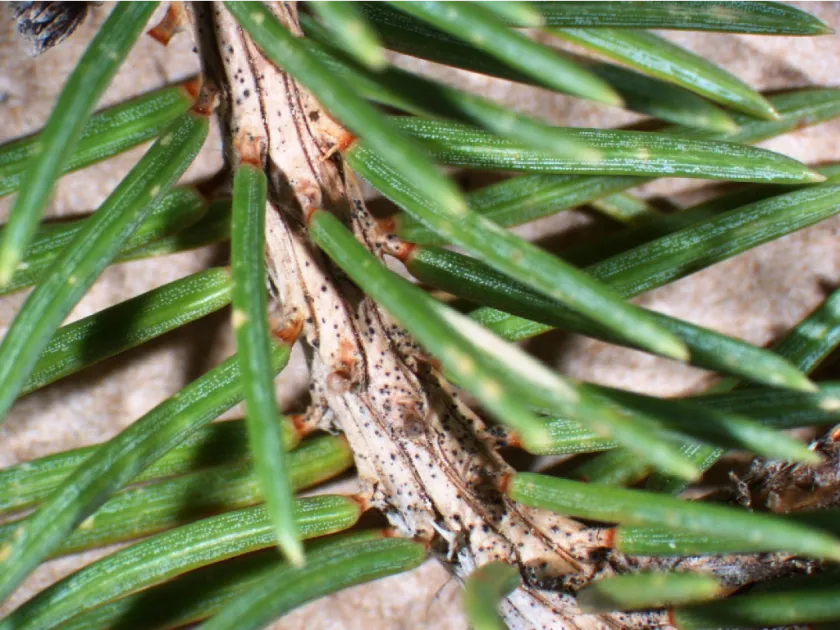
The primary symptom of infection is the development of dark, sunken cankers or irregular necrotic patches on the bark of stems and branches.
Infected areas often show signs of cracking and peeling, revealing the decaying inner layers of the bark beneath the surface.
Small, dark, pimple-like fruiting bodies (pseudothecia) can be observed scattered across the surface of the lesions under magnification.
Branch dieback is a common outcome, characterized by the foliage turning chlorotic, wilting, and eventually dropping prematurely.
Severe infestations can lead to the girdling of stems, which cuts off nutrient flow and inevitably causes the death of the distal parts of the tree.
Pathogen
Setomelanomma holmii is a fungal pathogen within the Pleosporales order, primarily known for causing necrotic lesions on woody plants and shrubs.
As an ascomycete fungus, it completes its life cycle by forming small, dark pseudothecia embedded within the cortical tissue of its host plant.
The fungus functions as a necrotrophic parasite, actively colonizing host tissue and breaking down structural components such as cellulose and lignin.
It spreads efficiently via ascospores, which are released during periods of high humidity and wind, allowing for rapid colonization of susceptible surfaces.
The organism is notably resilient, capable of surviving for extended periods as a saprophyte on decaying bark before reinfecting healthy plant tissues.
Conditions for development
The pathogen thrives under conditions of high moisture, particularly in environments with prolonged periods of leaf wetness and high relative humidity.
Cool to moderate temperatures, typical of early spring or autumn, provide the most favorable window for spore germination and mycelial expansion.
Host susceptibility increases significantly when the tree has sustained mechanical injuries, such as frost cracks, sunscald, or improper pruning cuts.
Trees that are under environmental stress, such as drought or nutrient deficiency, are much more likely to develop severe symptoms upon inoculation.
Overcrowded plantations or sites with poor air circulation create a microclimate that prevents bark drying and facilitates the rapid spread of the fungus.
Why it matters
The primary threat of Setomelanomma holmii is the chronic impairment of the tree's vascular system, leading to overall physiological decline.
Repeated cycles of infection weaken the structural integrity of branches, making them prone to breakage during heavy winds or under the weight of snow.
For ornamental trees, the cosmetic damage caused by bark necrosis and branch death can significantly lower their aesthetic and market value.
If left unmanaged, the disease can transition from a localized infection to a systemic issue, eventually killing the entire host plant.
In nursery settings, the pathogen poses a significant economic risk due to its ability to spread rapidly among young, dense plant populations.
Protection
Effective management begins with strict sanitation: pruning out and destroying all symptomatic branches to reduce the amount of local inoculum.
Disinfecting all pruning tools between cuts is essential to prevent cross-contamination between infected and healthy trees in the same area.
Applying protective copper-based fungicides during the dormant season can help inhibit spore germination and protect susceptible bark tissues.
Maintaining optimal tree vigor through balanced fertilization and appropriate irrigation helps the host plant build natural defenses against fungal invasion.
- Seal large wounds with professional-grade wound dressings.
- Monitor trees regularly for early signs of bark discoloration.
- Improve air circulation by pruning for crown thinning.
Discussion
No discussions yet — be the first.