
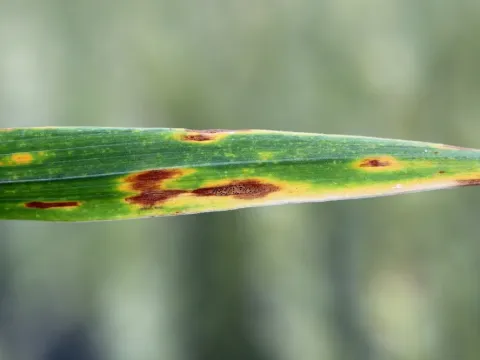
Septoria leaf blotch
Septoria spp.
Septoria leaf blotch is caused by fungal pathogens belonging to the genus Septoria. These fungi are significant pathogens affecting a wide range of cereals, including rye and maize.
What the section contains
Septoria leaf blotch
The fungus survives between seasons on crop residues, infected seeds, and volunteer plants, serving as the primary source of inoculum for the next crop.
Reproduction occurs through pycnidia, which release conidia that are spread to healthy plants via rain splashes and wind gusts.
The infection process is complex, involving the germination of spores on the leaf surface, followed by penetration through the stomata.
Once inside, the mycelium colonizes plant tissue, leading to the development of necrotic lesions and subsequent production of new pycnidia, completing the disease cycle.
Symptoms typically begin as small, chlorotic spots that enlarge into irregular, necrotic lesions, often surrounded by a yellow halo.
A distinctive diagnostic feature is the presence of small, dark brown or black fruiting bodies called pycnidia, clustered within the dead areas of the lesions.
On susceptible hosts like rye, lesions can coalesce to cover entire leaves, causing the foliage to wither and die prematurely starting from the base of the plant.
In maize, the disease presents as elongated, grayish-brown blotches that may reduce the overall photosynthetic capacity of the leaves.
In severe cases, the infection can extend to the stem, leaf sheaths, and ears, negatively affecting grain development and overall plant health.
The development of Septoria is heavily favored by prolonged periods of cool, wet weather, as high relative humidity is essential for spore germination.
The optimal temperature range for infection is generally between 15°C and 25°C, making spring and early summer high-risk periods for many crops.
High plant density and nitrogen-rich canopy environments that retain moisture for longer periods significantly increase the rate of disease progression.
Frequent rainfall events not only facilitate the initial infection but also actively transport spores across the field, leading to secondary outbreaks.
Poor field hygiene, such as leaving infected stubble on the soil surface, provides a continuous reservoir for the pathogen to persist and re-infect.
The economic impact of Septoria leaf blotch is primarily due to the reduction of the green leaf area, which limits the plant's ability to photosynthesize.
As leaves die prematurely, the plant's capacity to fill the grain is significantly curtailed, resulting in reduced yields and lower test weights.
Heavily infected crops often produce shriveled or lightweight kernels, which fail to meet quality standards for milling or further industrial use.
Beyond yield loss, the disease weakens the overall physiological state of the crop, making it more susceptible to environmental stress and secondary invaders.
In cases of severe infestation, the cumulative loss in yield can be substantial, often requiring costly fungicide interventions to salvage the crop.
Effective management requires an integrated approach that combines genetic, cultural, and chemical tactics to minimize pathogen pressure.
Choosing resistant or tolerant crop varieties is the most fundamental and sustainable strategy for mitigating potential losses.
Cultural practices, such as deep tillage to bury infected debris and crop rotation, are essential for disrupting the life cycle of the pathogen.
Fungicide application, timed precisely according to the growth stage and disease pressure, remains a vital tool for protecting high-yielding crops.
- Use certified, fungicide-treated seeds to ensure a healthy start.
- Implement proper crop rotation cycles with non-host species.
- Maintain adequate plant spacing to promote airflow and decrease leaf wetness.
- Monitor weather patterns to apply foliar fungicides preventively when conditions are ideal for disease.