
Septoria leaf blotch of oat
Parastagonospora avenae
Description
Symptoms
Initial symptoms manifest as small, brown, oval-shaped spots on the lower leaves, often surrounded by a noticeable chlorotic (yellow) halo indicating plant stress.
As the disease progresses, these lesions enlarge and coalesce, eventually covering large portions of the leaf surface, which causes the leaf to dry out and wither prematurely.
A definitive diagnostic feature is the presence of tiny, dark-colored fruiting bodies called pycnidia, which appear within the dead tissue of the lesions.
The pathogen can also move to the leaf sheaths and stems, creating dark brown to black necrotic areas that significantly weaken the structural integrity of the oat stalk.
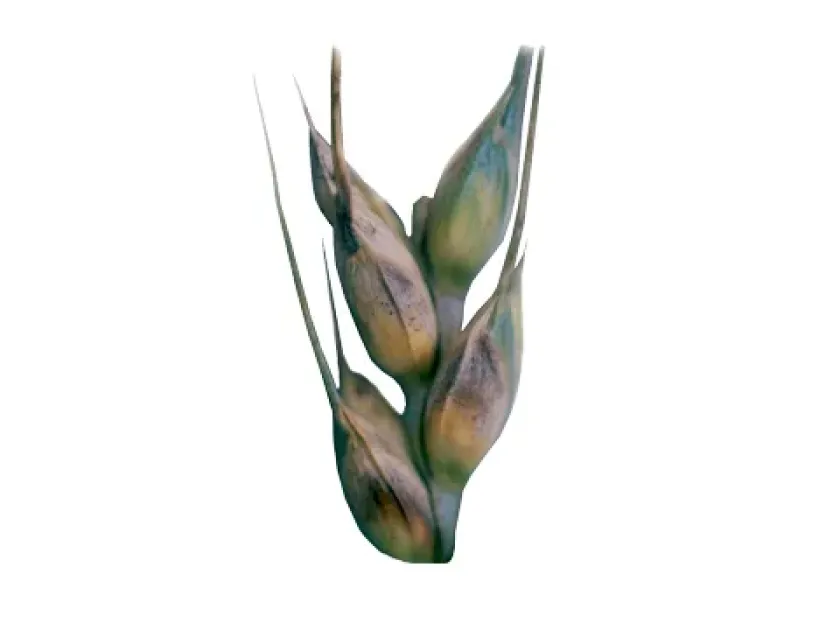
In severe cases, infection spreads to the panicles and spikelets, directly interfering with grain filling and resulting in shriveled or discolored kernels.
Pathogen
The causal agent of septoria leaf blotch in oats is the fungus Parastagonospora avenae, previously referred to as Stagonospora avenae, with Phaeosphaeria avenaria as its sexual stage.
This pathogen belongs to the Dothideomycetes class and primarily affects oat crops, although it can occasionally be found on other related grass species in agricultural landscapes.
The fungus overwinters as mycelium or as fruiting bodies (pycnidia and pseudothecia) on crop residues, fallen leaves, and can also be seed-borne, establishing infection early in the season.
Conidia, produced in pycnidia, are dispersed by rain splash, while ascospores produced in pseudothecia are airborne, both serving as primary and secondary inoculum sources.
Once the spores land on a host leaf, they germinate under favorable conditions, penetrate the tissue through natural openings, and colonize the host cells, leading to characteristic lesion development.
Conditions for development
High humidity and frequent rainfall are the most critical environmental factors that promote the development and rapid spread of septoria leaf blotch.
The fungus thrives in moderate temperature conditions, typically ranging from 18 to 25 degrees Celsius, which are common during the active growth stages of oats.
Dense crop stands often create a humid microclimate within the canopy, which allows the pathogen to cycle rapidly from the lower leaves to the upper foliage.
Continuous cropping of oats or other susceptible cereals on the same land facilitates the buildup of fungal inoculum, increasing the risk of early-season infection.
Extended periods of leaf wetness are essential for spore germination and successful host penetration, making rainy seasons high-risk periods for oat production.
Why it matters
The primary impact of septoria is the significant reduction in the green leaf area, which severely restricts the plant's photosynthetic capacity and potential grain yield.
Infected crops often show reduced kernel weight, lower test weight, and poor grain quality, which impacts the economic value of the harvested crop for feed or processing.
Stem lesions weaken the plants, often leading to lodging, which complicates harvesting and increases mechanical grain losses in the field.
Severe epidemics can cause substantial yield losses, often ranging from 15 to 30 percent, depending on the severity of the infection and the timing of the outbreak.
- Reduced photosynthetic efficiency.
- Lower grain weight and quality.
- Increased risk of crop lodging.
Protection
Crop rotation remains the most effective long-term management strategy, as it disrupts the life cycle of the pathogen and prevents inoculum buildup in the soil.
Effective tillage practices that bury infected crop residues deep into the soil can significantly accelerate the decomposition process and reduce initial spore pressure.
Selecting and planting resistant or moderately resistant oat varieties is the best preventative measure to minimize the reliance on chemical control methods.
Fungicide applications during the critical stages of stem elongation and flag leaf emergence are recommended if weather conditions are conducive to disease development.
Using high-quality, treated seed is essential to prevent the introduction of the pathogen into new fields and to protect seedlings from early infection.
Discussion
No discussions yet — be the first.