
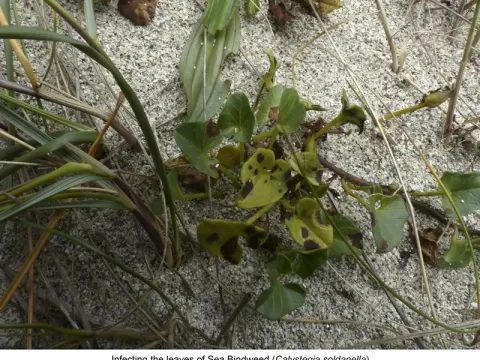
Septoria leaf spot of bindweed
Septoria convolvuli
The causative agent of this disease is the fungus Septoria convolvuli, classified within the Deuteromycetes group. This pathogen is highly specialized and primarily attacks species within the Convolvulaceae family, causing typical foliar blight.
What the section contains
Septoria leaf spot of bindweed
The fungal life cycle involves the formation of pycnidia, which are minute, flask-shaped structures embedded within the host leaf tissue. These pycnidia act as maturation chambers for conidia, the primary spores responsible for spreading the infection.
The pathogen overwinters as dormant mycelium or pycnidia on infected plant debris and fallen leaves. When spring temperatures rise and moisture levels increase, the pycnidia release conidia, which are dispersed by splashing rain or wind onto healthy plant surfaces.
The fungus is capable of producing multiple generations of spores throughout the growing season. This rapid reproductive cycle allows the disease to spread across a host population very quickly under conducive environmental conditions.
Upon infection, the fungal hyphae invade the intercellular spaces of the leaf, releasing enzymes that break down plant tissue. This process leads to the formation of characteristic necrotic spots that disrupt the host's normal metabolic functions.
Early symptoms appear as small, circular or angular spots on the foliage. These lesions are often restricted by the leaf veins, which is a hallmark feature of many Septoria-related plant diseases.
As the infection progresses, the spots expand and develop a light gray or whitish center, often surrounded by a distinct dark-brown or purple-black border. Eventually, small black dots—representing the fungal pycnidia—emerge on the surface of the lesions.
Severe infections cause the affected leaves to yellow, curl, and eventually wither. Widespread necrosis reduces the overall photosynthetic capacity of the plant, leading to significant physiological stress.
In cases of heavy infestation, premature leaf drop is common, which significantly weakens the plant. The loss of foliage also affects the plant's aesthetic value, which is particularly detrimental for ornamental varieties.
- Formation of pale-centered lesions with dark margins.
- Presence of tiny black pycnidia scattered across the spots.
- Yellowing and necrosis of the entire leaf blade.
- Premature abscission (dropping) of infected leaves.
The development of Septoria convolvuli is strongly linked to high humidity and moderate temperatures. Prolonged periods of rainfall, heavy dew, or foggy conditions create the necessary moisture for spore germination and infection.
The optimal temperature for fungal growth and spore production is generally between +18°C and +25°C. Within this range, the pathogen's development is rapid, often resulting in visible symptoms within a short incubation period.
Dense vegetation or crowded planting conditions trap humidity and prevent airflow. This creates a microclimate that is exceptionally favorable for the spread and intensification of the fungal disease.
Agricultural practices that promote succulent growth, such as excessive nitrogen fertilization, make plants more susceptible to infection. The softer tissues provide easier access for the fungal hyphae to colonize.
The peak incidence of the disease typically occurs in late summer, when the accumulated spore load is high. Any fluctuations that favor moisture retention on the leaves will trigger a new wave of symptom development.
The primary damage caused by Septoria leaf spot is the reduction of the plant's photosynthetic surface area. By destroying leaf cells, the pathogen limits the plant's ability to produce energy, hindering growth and development.
Plants affected by the disease must redirect resources to replace lost foliage or repair damaged tissues, which drains energy reserves. This leads to weakened root systems and stunted overall growth.
Premature leaf loss renders the plant more susceptible to environmental stressors, including drought and winter damage. Severely weakened plants may fail to recover in subsequent seasons or be prone to secondary infections.
In the context of ornamental gardening, the loss of foliage ruins the plant's appearance. The persistent symptoms make the bindweed unsightly, often requiring the complete removal of infected specimens.
In extreme cases, the pathogen can cause the total collapse of the canopy, especially in younger or less vigorous plants. This limits the survival and reproductive success of the plant population under high disease pressure.
Sanitation is the most critical component of management. Removing and destroying all infected plant debris during the autumn and winter is essential to eliminate the primary inoculum source for the following season.
Cultural practices should focus on maximizing air circulation to allow foliage to dry quickly. Proper spacing and weed control help maintain a less humid microclimate, significantly inhibiting fungal development.
Fungicidal applications, particularly those containing copper or triazole compounds, are effective if applied upon the first signs of spotting. Proper coverage of both leaf surfaces is vital for protection.
To avoid the development of fungicide resistance, it is recommended to rotate products with different modes of action. Following label instructions regarding application intervals ensures the best results.
Maintaining plant health through balanced fertilization and appropriate water management increases natural resistance to the pathogen. A proactive approach effectively minimizes the risk of widespread infection.