
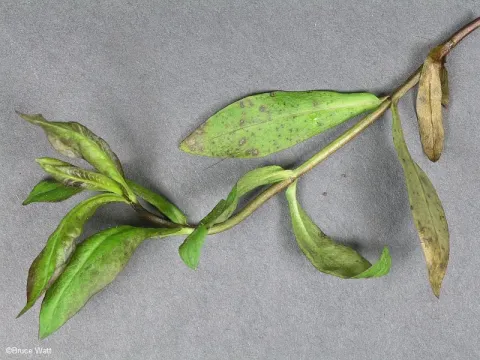
Phlox septoria leaf spot
Septoria phlogis
The causative agent of this disease is the fungus Septoria phlogis, which belongs to the group of imperfect fungi. The pathogen attacks the vascular system and leaf blades of the plant, gradually depleting its energy resources.
What the section contains
Phlox septoria leaf spot
The life cycle of the pathogen is closely tied to plant debris, where the fungus successfully overwinters in the form of mycelium or pycnidia. In the spring, spores are spread by wind or raindrops.
The infection begins on the lower leaves, gradually moving up the stem. It is crucial to understand that the fungus has a high capacity for spore regeneration throughout the growing season.
Microscopic spores enter the plant tissues through stomata or micro-injuries in the epidermis. After penetration, the pathogen begins to proliferate actively within the intercellular space.
This fungus is a highly specialized parasite that primarily attacks members of the genus Phlox, making it a significant concern for ornamental plant management.
The first signs of septoria appear in early summer as small, round spots on the lower leaves of the plant. Initially, they have a grayish-brown hue with a darker rim.
Over time, the spots increase in size and can merge, covering a significant area of the leaf. In the center of the spots, one can often see small black dots, which are the fruiting bodies of the fungus (pycnidia).
As the disease progresses, the affected leaves turn yellow, wither, and drop prematurely. This leads to a significant weakening of the entire phlox bush.
In high humidity, a faint grayish coating consisting of fungal spores may appear on the underside of the leaves. The infection gradually spreads to the middle and upper levels of the stems.
In severe cases, phlox stems can be covered with elongated necrotic spots, which prevents the normal movement of nutrients and water throughout the plant.
High humidity and moderate temperatures between 20–25 degrees Celsius favor the development of Septoria phlogis. Long periods of rain and heavy dew are particularly dangerous.
Crowded plantings with poor air circulation create an ideal microclimate for spore germination. Poor ventilation allows moisture to remain on the leaves for extended periods.
Lack of sufficient sunlight also promotes the spread of fungal infection. In shaded areas, moisture evaporates more slowly, providing a favorable environment for the pathogen.
Excessive nitrogen fertilization reduces the natural resistance of phlox, making them more susceptible to fungal spore penetration. Plants become succulent and more prone to infection.
Improper watering, especially overhead irrigation in the evening, helps maintain liquid moisture on the leaf surface, which is critical for the infectious process.
The main danger of septoria is the premature death of the foliage. Without leaves, the phlox loses its ability to perform effective photosynthesis, which sharply reduces its ornamental value.
Severe infestation leads to weakening of the root system and reduced cold hardiness. Due to a lack of stored nutrients, phlox plants may perish during the winter.
The disease negatively affects flowering quality: blooms become smaller and their lifespan is significantly reduced. The plant looks stunted and loses its varietal characteristics.
Septoria contributes to the depletion of energy reserves in the rhizomes, affecting growth and development in the following season. Infected specimens become a permanent source of infection in the garden.
The absence of timely intervention can lead to the total loss of a phlox collection, as the fungus spreads very rapidly to healthy plants.
The primary method of control is the timely removal and destruction of all plant debris in the fall. This significantly lowers the infection pressure in the garden for the following year.
It is important to maintain proper spacing when planting to ensure good air circulation around the bushes. This prevents moisture stagnation and limits fungal development.
- Preventive application of copper-based fungicides (Bordeaux mixture and similar products).
- Regular application of phosphorus-potassium fertilizers to strengthen plant immunity.
- Timely removal and disposal of the first infected leaves from the bush.
If clear signs of the disease are detected, systemic fungicides with curative and protective properties are necessary. Applications should be performed at 10–14 day intervals.
Watering should be performed strictly at the base of the plant to avoid splashing water onto the leaf blade, especially during periods of unstable weather and high humidity.