
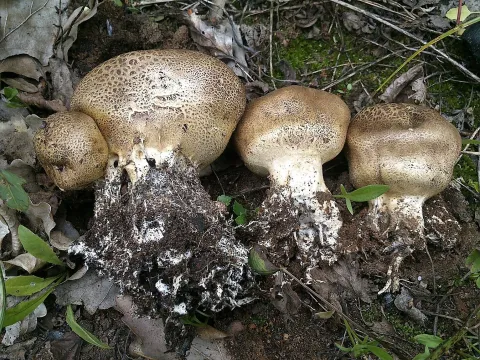
Scaly earthball
Scleroderma verrucosum
The scaly earthball, known scientifically as Scleroderma verrucosum, is a widespread soil-inhabiting fungus that acts as a garden saprotroph.
What the section contains
Scaly earthball
It belongs to the family Sclerodermataceae and is frequently encountered in forest soils, gardens, and managed landscapes where it associates with tree roots.
This fungus is not a primary plant pathogen, but it often colonizes areas where soil health or moisture levels are not managed effectively.
Its life cycle involves the production of underground mycelium that draws nutrients from organic matter and woody substrates present in the soil.
The fungus relies on the dispersal of mature spores from its fruiting bodies, which can remain viable in the soil for several growing seasons.
The primary sign of its presence is the appearance of round or irregular fruiting bodies, often emerging directly from the soil surface.
The outer skin of the Scleroderma verrucosum is characterized by a bumpy, scaly, or wart-like texture, which is its most distinct identification feature.
When the fruiting body matures, the interior turns into a dark, dusty, brownish-black spore mass, emitting a distinct, musty, soil-like odor.
In turfgrass environments, the presence of this fungus can lead to patches of thin or slightly yellowish grass due to soil nutrient changes.
Clusters of these earthballs are common in damp, shady areas, especially around the drip lines of large deciduous or coniferous trees.
The growth of the scaly earthball is primarily driven by high moisture content and poorly drained soil conditions found in landscape beds.
This species flourishes in acidic soils that are rich in partially decomposed organic matter, such as leaf mold, wood chips, or mulch.
Shaded environments with minimal direct sunlight provide the necessary conditions for the mycelium to establish itself and produce fruiting bodies.
Excessive irrigation or periods of heavy rainfall often trigger a surge in the appearance of these fungi during the late spring and summer months.
The availability of host tree roots for mycorrhizal association significantly enhances the fungus's ability to survive and spread within a garden area.
The primary concern is the negative impact on the aesthetic appeal of lawns, flowerbeds, and other landscaped areas where the fungi appear.
It can disrupt the balance of beneficial soil microbes, potentially hindering the optimal growth and nutrient uptake of ornamental garden plants.
The fruiting bodies are toxic if ingested, posing a significant safety risk to pets and small children who may encounter them in the yard.
Repeated spore dispersal makes it difficult to eradicate the fungus permanently from a site without addressing the underlying soil conditions.
Large colonies may create patches of inhibited growth, making it challenging to maintain uniform turf health or plant density in affected areas.
The most effective immediate control is to manually remove the fruiting bodies as soon as they appear to prevent spores from maturing and spreading.
Improving soil drainage through aeration and landscape grading is essential to reduce the moisture levels that promote fungal colonization.
Adjusting the soil pH through liming can create an environment that is less favorable for the growth of this acid-loving soil fungus.
Keep garden beds free of excessive wood debris, old mulch, and decaying leaf matter to reduce the food sources available to the mycelium.
In cases of severe infestation, soil-targeted fungicide applications can be used, though this should be combined with cultural improvements for lasting success.