
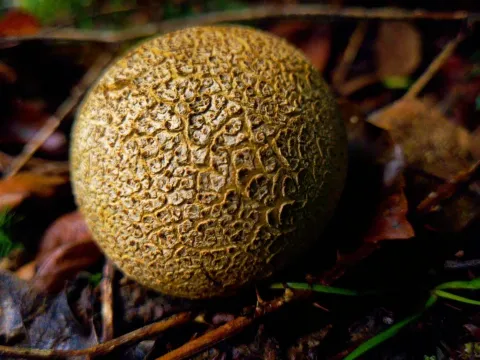
Scleroderma areolatum
Scleroderma areolatum
Scleroderma areolatum, commonly known as the scaly earthball, is a fungal species belonging to the Sclerodermataceae family, widely distributed in temperate forest regions and gardens.
What the section contains
Scleroderma areolatum
The organism primarily exists as a subterranean mycelial network, which acts as a mycorrhizal partner to various woody plants, contributing to nutrient exchange in the soil ecosystem.
Its fruiting bodies, known as basidiocarps, develop either just below or at the surface of the soil, characterized by a firm, leathery outer skin called the peridium.
Biologically, it is a gasteromycete, meaning the spores mature internally within the fruiting body and are released only when the exterior wall ruptures or decomposes.
While not a classical plant pathogen, its presence in managed turfgrass or ornamental landscapes is often seen as a disruption to the desired horticultural aesthetic.
The most visible sign of the fungus is the emergence of small, hard, yellowish-brown, ball-like fruiting bodies scattered across the soil or lawn surface.
A diagnostic feature is the presence of distinct scales or areolae on the peridium, which form a crackled, mosaic-like pattern that gives the species its specific name.
When the fruiting body is mature, the internal gleba turns from a light color to a dark, purple-black mass of powdery spores that releases upon physical contact.
Users may notice localized yellowing of grass blades or patches of weakened turf directly where the fungal colonies are most active in the underlying soil.
A faint, sometimes metallic or musty odor may be detected when the fruiting bodies are accidentally crushed during lawn maintenance or walking.
The fungus thrives in environments with consistently high moisture levels, particularly in shaded or semi-shaded areas where evaporation rates are low.
Scleroderma areolatum shows a strong preference for acidic to slightly acidic soils enriched with decaying organic matter, such as leaf litter or wood mulch.
Optimal conditions for fruiting body production typically occur in late summer and autumn, supported by moderate temperatures ranging from 15 to 22 degrees Celsius.
Poorly drained soils or compacted ground that retains water for extended periods provide an ideal substrate for the proliferation of the mycelium.
High humidity and lack of adequate sunlight facilitate the expansion of the fungal colony, allowing it to colonize new areas of the garden or lawn effectively.
The primary concern regarding this fungus is its toxicity; ingestion of the fruiting bodies by pets or humans can cause significant gastrointestinal distress.
It acts as an aesthetic nuisance in turf management, creating unsightly clusters that disrupt the uniformity and quality of golf courses, parks, and home lawns.
In nursery settings, heavy colonization might compete with young plant root systems for limited moisture and nutrients, potentially impacting overall seedling vigor.
The massive release of spores during the late maturation phase can trigger respiratory irritation or allergic reactions in sensitive individuals prone to fungal spore exposure.
Economic damage arises from the cost of labor and chemical interventions required to eradicate or manage outbreaks in high-value green spaces.
The most effective physical control is the prompt removal and disposal of fruiting bodies before they mature and release their dark, dusty spore mass.
Improving soil drainage and implementing aeration practices are crucial steps to modify the environment, making it less hospitable for the mycelium to persist.
Adjusting soil pH through liming can decrease acidity, which often discourages the growth of Scleroderma species while benefiting general plant health.
The use of soil-drenching fungicides or biological control agents (such as beneficial bacteria) can help suppress the fungal colony when infestations become severe.
Preventive maintenance, including balanced fertilization and proper irrigation management to avoid surface water logging, helps maintain long-term turf resistance.