
Scleroderma polyrhizum
Scleroderma polyrhizum
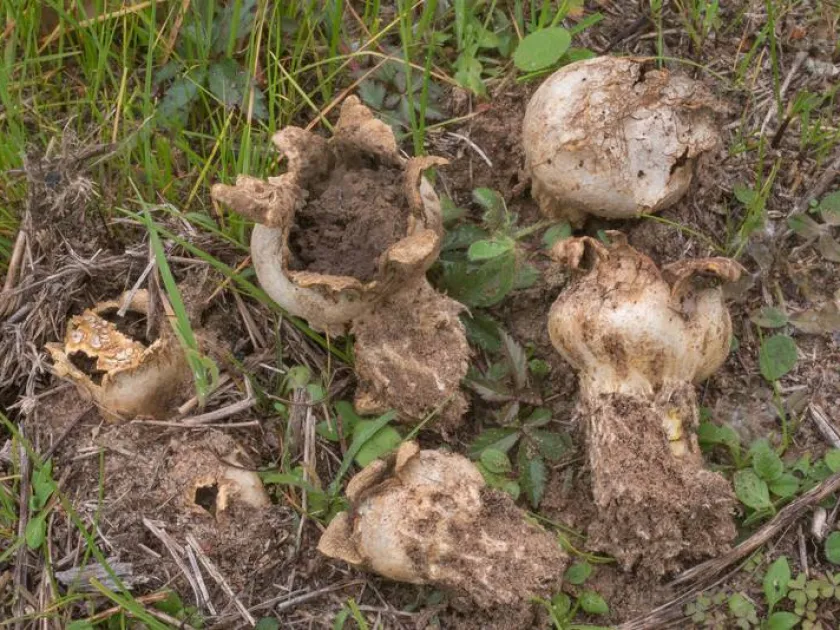
Description
Pathogen
Scleroderma polyrhizum, commonly known as a type of earthball, is a basidiomycete fungus. It is essential to clarify that this fungus is not a plant disease or an agricultural pathogen.
The organism is a soil-dwelling saprotroph that feeds on decomposing organic matter. It does not infect living plant tissues, nor does it cause root rot or any other crop diseases.
In agronomic practice, its presence is sometimes misinterpreted because the fruiting bodies can grow near the root zones of trees or shrubs, creating a false impression of root tumors or galls.
This fungus contributes to the ecosystem by participating in the breakdown of complex organic compounds, which enhances the overall nutrient cycling in the soil profile.
Because it lacks parasitic capabilities towards agricultural crops, it requires no fungicides or phytosanitary measures for management within farming systems.
Conditions for development
Scleroderma polyrhizum thrives in well-aerated sandy or loamy soils. Its growth is particularly favored by locations with significant organic content in the soil matrix.
Environmental moisture is a key factor for the development of its fruiting bodies. Increased humidity following rainfall events usually triggers the emergence of these structures.
The fungus is highly resilient to dry spells, which allows it to persist in the soil even when moisture levels are below optimal for other fungal species.
Spore dispersal occurs when the outer peridium (shell) of the fruiting body splits in a stellate, star-like pattern, releasing a mass of dark, dusty spores into the surrounding area.
The subterranean nature of its initial growth stage often leads farmers to notice it only when the fruiting bodies break through the soil surface.
Discussion
No discussions yet — be the first.