
Rhodonia placenta
Rhodonia placenta
Rhodonia placenta, previously classified as Postia placenta, is a basidiomycetous fungus belonging to the order Polyporales. It is a highly aggressive brown rot agent that specializes in decaying the cellulose content of both softwood and hardwood species.
What the section contains
Rhodonia placenta
The fungus operates by secreting enzymes that break down the carbohydrate structure of the cell wall, leaving behind the brownish lignin matrix. This biological process significantly alters the chemical composition and structural integrity of the timber.
The pathogen is known for its rapid colonization capabilities and its resilience under fluctuating environmental conditions. In forest ecosystems, it plays a vital role as a decomposer of deadwood, though it becomes a destructive force in human structures.
Mycologically, it is characterized by its ability to spread via basidiospores and mycelial expansion. Its high tolerance to common wood preservatives makes it particularly challenging to manage in industrial construction environments.
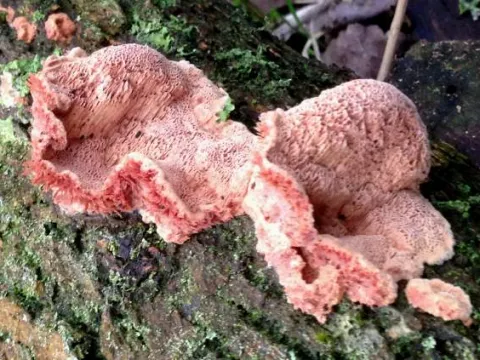
The fungus thrives by forming dense mats of mycelium that permeate deep into the wood grain. Identification in the field relies on the presence of white to pinkish, resupinate, or effused-reflexed fruiting bodies on the wood surface.
The primary symptom of Rhodonia placenta infection is a distinct color change in the wood, shifting toward a reddish-brown or yellowish-brown hue. The affected timber progressively loses its structural rigidity.
As the rot advances, the wood develops characteristic longitudinal and transverse cracks, resulting in a cube-like fragment pattern known as cubical brown rot. These cubes eventually crumble into a fine, dust-like powder when pressure is applied.
A thick, white or yellowish cottony mycelial mat often appears on the exterior surfaces of infested timber. During the reproductive stage, the fungus produces small, soft fruiting bodies that indicate the maturity of the fungal colony.
A musty or medicinal "fungal" odor is frequently associated with active stages of the decay. Internally, the timber may become hollowed out as the mycelium consumes the wood fibers from within, often hidden behind sound-looking surfaces.
Inspectors should look for damp, poorly ventilated areas where the wood feels unusually soft or spongy. Probing the surface with a tool often reveals the depth of the decay, as infected wood offers little resistance to penetration.
High moisture content is the critical environmental trigger for Rhodonia placenta development. Wood with a moisture content exceeding 20–25% creates a prime environment for spore germination and mycelial growth.
The fungus prefers temperate climates, with optimal growth occurring at temperatures between 20°C and 28°C. In such conditions, the fungal colony can aggressively consume structural members within a relatively short timeframe.
Poor ventilation exacerbates the spread of the fungus by preventing moisture from escaping confined spaces. Areas like crawl spaces, attics, and closed-wall voids without adequate airflow are highly susceptible to colonization.
The dispersal of the pathogen primarily occurs via airborne basidiospores that can land on untreated wood surfaces. Direct contact with infected soil, old lumber, or contaminated tools can also transmit the fungus to new locations.
Inadequate storage practices, such as stacking damp lumber without proper spacers or exposing timber to rain, significantly increase the risk of infestation before the construction phase even begins.
The most significant danger of Rhodonia placenta is the severe loss of structural integrity it inflicts on wooden buildings. Because brown rot consumes cellulose, the wood loses its tensile and compressive strength early in the decay process.
The fungus poses a high safety risk, as it can cause the sudden collapse of flooring systems, roof trusses, or load-bearing beams without significant prior warning. This makes structural failure a major concern in infested buildings.
Economically, the impact is immense, as infested timber is usually irreparable and requires complete replacement. This leads to costly remediation efforts and labor-intensive demolition of the infected wooden members.
The fungus can spread rapidly through connected wooden elements, turning minor local infections into widespread damage throughout a structure. This aggressive growth pattern necessitates strict containment and sanitation procedures.
Beyond structural damage, Rhodonia placenta can negatively impact indoor air quality. The release of spores and volatile organic compounds during the decay process may trigger allergic reactions or respiratory issues in occupants.
Prevention starts with controlling moisture: drying timber to below 18% moisture content effectively halts fungal growth. Maintaining this "dry state" is the most robust strategy for protecting wooden infrastructure.
Effective waterproofing is essential to prevent external moisture from reaching structural members. Proper use of membranes, sealants, and flashings shields the wood from soil contact and moisture ingress from rain or humidity.
Chemical protection using professional-grade fungicides is highly recommended for at-risk areas. Treatments should be applied via deep-penetration methods to ensure that the inner wood fibers are protected from mycelial entry.
Ensuring adequate airflow through vents, gaps, and passive circulation systems is critical to reducing surface dampness. Good ventilation prevents the localized high-humidity zones that the fungus relies on to thrive.
If decay is discovered, the standard remediation protocol involves removing all infested wood, plus an additional buffer of sound wood to ensure the entire fungal colony is eliminated. All adjacent surfaces must be treated with preservatives to prevent regrowth.