
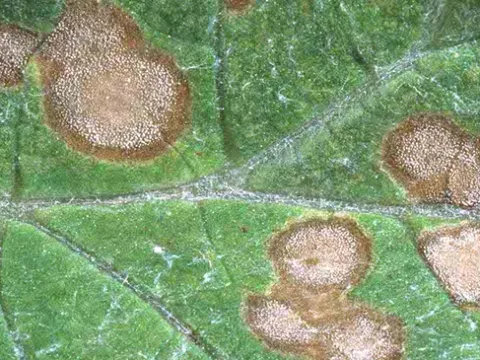
Ramularia leaf spot of coltsfoot
Ramularia calcea
The causative agent of the disease is the imperfect fungus Ramularia calcea. It is a specialized pathogen primarily affecting plants within the Asteraceae family, including the common coltsfoot.
What the section contains
Ramularia leaf spot of coltsfoot
The fungus mycelium develops intercellularly within the leaf tissues. It extracts nutrients from the host plant's cells, which ultimately leads to the localized tissue necrosis observed as spots.
The pathogen overwinters as mycelium or conidia within dead plant debris, making soil sanitation a critical step in managing the disease cycle for the following season.
During the growing season, the fungus reproduces asexually. It produces conidiophores that emerge through the plant's stomata, releasing spores that are easily dispersed by wind and splashing water.
The biological cycle of Ramularia calcea is tightly synchronized with the development of its host plant, ensuring that the pathogen has a consistent supply of nutrients throughout the vegetation period.
The primary symptom is the appearance of distinct leaf spots. Initially, these appear as small chlorotic lesions that gradually expand and change color to brown or dark tan.
A typical sign is the presence of a yellow halo surrounding the necrotic spots, indicating the plant's reaction to the fungal enzymes and toxin production by the pathogen.
On the underside of the leaves, a sparse white or greyish powdery growth can often be seen. This consists of masses of conidia and conidiophores, which are diagnostic features of this infection.
As the disease progresses, multiple spots may coalesce, covering large portions of the leaf surface. This leads to the yellowing, wilting, and eventual premature death of the affected foliage.
Severe infestations drastically reduce the plant's aesthetic value and its chemical quality, making the leaves unsuitable for medicinal or therapeutic use.
High relative humidity and moderate temperatures are the most critical factors for the development of Ramularia leaf spot. Damp, rainy weather triggers rapid disease spread.
Extended periods of morning dew or fog provide the necessary moisture film on the leaves, which is essential for the germination of fungal spores and infection.
Dense vegetation or poorly ventilated growing sites facilitate the accumulation of moisture around the leaves, creating a microclimate that strongly favors the pathogen.
The optimal temperature range for the fungal metabolism and development is generally between +18°C and +24°C, which often coincides with the peak growth season of the coltsfoot plant.
Insufficient sunlight, which slows down the drying process of the foliage, allows the pathogen to remain active and penetrate the host tissue more effectively.
The primary harm is the destruction of the leaf tissue, which is the specific part of the coltsfoot plant harvested for its pharmaceutical properties.
By damaging the photosynthetic apparatus, the fungus reduces the plant's overall vigor and limits its ability to produce and store vital secondary metabolites.
The aesthetic and chemical degradation of the leaves caused by the fungal spots makes the harvest economically and therapeutically worthless.
Persistent infections over several seasons may weaken the host plant, reducing its reproductive success and overall resilience in its natural environment.
Large-scale outbreaks can lead to premature leaf drop, shortening the harvest window and negatively impacting the productivity of the herb patch.
The most effective management strategy involves thorough sanitation, including the removal and destruction of all infected plant debris to reduce the overwintering inoculum.
Improving air circulation within the plant stand is crucial; this can be achieved by thinning plants and ensuring they are not crowded during the growing season.
Selecting well-drained and sun-exposed sites for cultivation helps maintain lower humidity levels, making the environment less hospitable for the fungus.
Fungicide application is possible in controlled cultivation settings, but strict adherence to pre-harvest intervals is necessary due to the medicinal use of the plant.
Integrated pest management focusing on plant spacing, timely removal of symptomatic leaves, and site selection is the best approach to control the disease.