
Ramularia leaf spot of lady's mantle
Ramularia deusta
Description
Symptoms
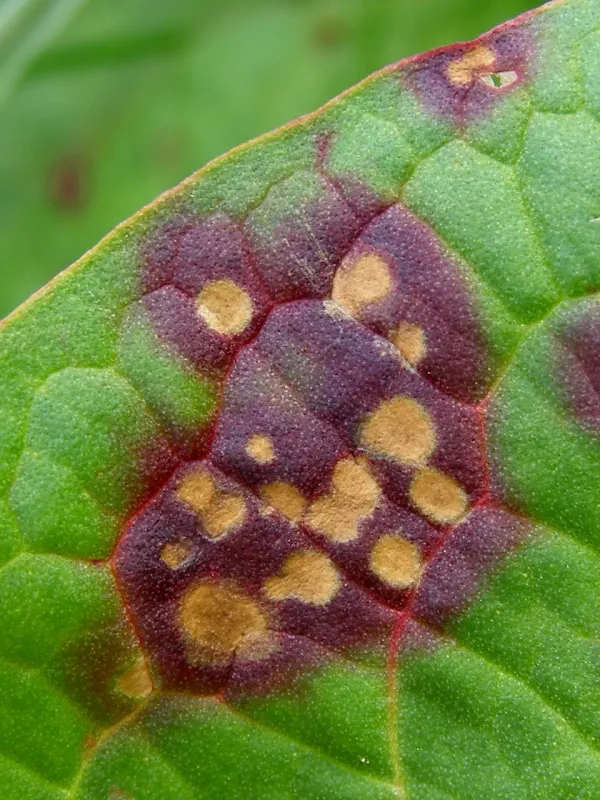
The primary sign of the infection is the appearance of small, round to angular spots on the leaves of lady's mantle. These spots start as pale yellow or brown marks and often develop a darker margin.
On the undersides of the leaves, a faint white or greyish dusty coating becomes visible in the center of the spots. These are masses of conidia produced by the fungus for dissemination.
As the disease progresses, the spots expand and may coalesce, covering large areas of the foliage. This eventually causes the leaves to yellow, wither, and die prematurely.
In severe cases, the entire plant structure may look stunted and deformed. This significantly degrades the aesthetic appeal of the plant during the growing season.
The stems can also show necrotic lesions if the infection is heavy, further compromising the structural integrity of the affected shoots.
Pathogen
The pathogen responsible for this disease is the mitosporic fungus Ramularia deusta. It is a specialized parasite that targets the foliage of specific herbaceous plants.
The fungus produces asexual spores called conidia, which serve as the main mechanism for spread. These spores are easily dispersed by wind currents and water splashes from rain or irrigation.
The fungus survives the winter primarily in infected plant debris left in the garden soil. It remains in a dormant state until environmental conditions favor the development of the mycelium.
Infection begins when spores land on leaves and penetrate the host tissue through stomata or small wounds. Once inside, the fungal mycelium grows and extracts nutrients from the plant cells.
The life cycle of the pathogen is relatively short, allowing for multiple infection cycles within a single season under favorable weather conditions.
Conditions for development
High humidity and prolonged periods of leaf wetness are the most critical factors for the development of Ramularia leaf spot. Rain, mist, and heavy morning dew create the perfect environment for spore germination.
The fungus thrives in mild temperatures, typically between 15 and 22 degrees Celsius. Extreme heat usually limits the spread of the pathogen, while cool, moist periods favor it.
Crowded planting schemes reduce airflow around the plants, allowing moisture to persist on the foliage for longer periods. This microclimate is highly conducive to disease outbreaks.
Improper irrigation practices, such as overhead watering, help transport spores from infected leaves to healthy parts of the plant and surrounding vegetation.
Lack of sanitation, such as failing to remove dead leaves, creates a persistent reservoir of inoculum that serves as a source for new infections every spring.
Why it matters
The primary harm is the destruction of the ornamental value of lady's mantle. The necrotic spots make the plants look unkempt and unattractive in garden beds.
Photosynthetic efficiency is significantly reduced as the necrotic tissue expands, leading to lower energy production and a decline in overall plant vigor.
Infected plants become more susceptible to other secondary pathogens and environmental stresses. Over time, this may result in the loss of plant vigor or even the death of the plant.
In nurseries, Ramularia infection leads to significant financial losses due to the downgrading or rejection of infected stock that cannot be sold.
The disease acts as a focus of infection, endangering nearby susceptible species and creating a cycle of disease that is difficult to break without active intervention.
Protection
Strict sanitation is the most effective preventative measure. Remove and burn or discard all infected plant materials during the fall to eliminate overwintering sites.
Apply fungicides when the first symptoms appear. Copper-based sprays or systemic fungicides can be used to protect healthy foliage and suppress active fungal growth.
Modify irrigation habits by watering at the base of the plant only. This keeps the foliage dry and prevents the spread of fungal spores via water droplets.
Provide adequate spacing between lady's mantle plants to encourage air movement and reduce humidity in the foliage zone, which discourages pathogen growth.
- Regular inspection of the garden for early signs.
- Use of certified healthy plant propagation materials.
- Application of bio-fungicides for early-season protection.
- Enhancing plant health through balanced soil management.
Discussion
No discussions yet — be the first.