
Ramularia leaf spot of mint
Ramularia menthicola
Description
Symptoms
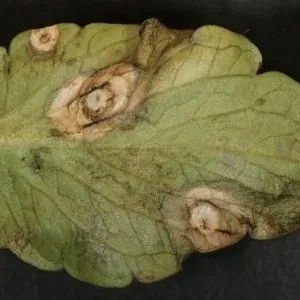
The first symptoms appear on the lower leaves as small, yellow-to-brown spots. As the infection progresses, these spots expand, often becoming angular or irregular in shape.
The centers of the spots often turn greyish-white due to the formation of dense conidial masses, surrounded by a dark-brown or purple-brown border that distinguishes the necrotic tissue.
In humid conditions, a characteristic greyish fungal growth becomes visible on the underside of the leaves. As the disease advances, affected leaves often curl, yellow, and drop prematurely.
If the infection is severe, the spots merge, leading to the necrosis of entire leaves. The disease can also affect stems, causing them to weaken and, in extreme cases, leading to stunted plant growth.
Overall, the plant appearance becomes unhealthy, and the loss of photosynthetic area due to foliage death significantly impairs the plant's metabolic functions.
Pathogen
The causal agent of Ramularia leaf spot is the imperfect fungus Ramularia menthicola. This pathogen is a host-specific fungus that primarily attacks various species and hybrids of mint within the Lamiaceae family.
The fungus survives the winter as mycelium or sclerotia in plant debris or in the soil. In spring, when environmental conditions become suitable, it produces conidia that serve as the primary source of infection.
Spread occurs through wind, rain splashes, and contact during harvesting or weeding. Once the conidia reach the leaves, they germinate and penetrate the epidermis or stomata to begin the colonization process.
Under favorable conditions, the pathogen can produce multiple generations during a single growing season. This rapid lifecycle allows for quick spreading if high humidity persists for several consecutive days.
The optimal temperature for fungal growth ranges from 18°C to 22°C. While the fungus is most active during the peak of the growing season, it can persist under a wide range of mild temperatures typical of temperate climates.
Conditions for development
High relative humidity and moisture are the most critical factors for the development of Ramularia leaf spot. Frequent rain, heavy dew, and high atmospheric humidity promote spore germination.
Overcrowded plantings and poor airflow contribute to moisture retention within the canopy. These microclimatic conditions are highly conducive to the rapid spread of the fungus.
Temperatures that remain consistently mild are ideal for the pathogen. Cool, wet springs often set the stage for severe outbreaks later in the growing season, especially if summer rain persists.
Inadequate soil management, such as poor drainage, exacerbates the disease risk. Furthermore, plants under stress from nutrient deficiencies or drought are often more susceptible to infection.
The presence of overwintered plant debris from previous mint crops provides the primary inoculum. Failing to clean the field after harvest ensures that the fungus remains present for the next season.
Why it matters
The primary economic harm caused by Ramularia leaf spot is the significant reduction in biomass yield. Since the foliage is the harvested product, any loss of leaf area directly impacts profitability.
The disease negatively affects the quality of essential oil. Infected plants have lower concentrations of menthol and other volatile compounds, which lowers the commercial value of the final raw material.
In cases of severe infestation, yield losses can reach 50% or more. Furthermore, the weakened plants are less winter-hardy and more prone to other diseases or environmental stress.
Affected crops often fail to meet the strict quality standards required by the pharmaceutical and food industries, leading to market rejection or the need for expensive additional processing.
Managing the disease requires additional investment in fungicides and increased labor for maintenance, which significantly impacts the cost-effectiveness of mint cultivation.
Protection
The foundation of effective control is cultural practice. Implementing a long-term crop rotation, avoiding mint cultivation on the same plot for at least 4 years, helps reduce soil-borne inoculum.
Sanitation is crucial; all plant debris must be removed and destroyed after harvest to eliminate the wintering sites of the fungus. Deep plowing can also help bury infected remnants.
Using disease-free, certified planting material is essential. Selecting resistant varieties, where available, provides a robust line of defense against the pathogen.
Fungicidal treatments may be necessary if symptoms appear early in the season. Copper-based compounds or specific systemic fungicides are generally effective, provided they are applied according to legal guidelines for herbs.
- Maintain proper plant spacing to ensure adequate air circulation.
- Optimize fertilization to avoid excessive nitrogen, which can lead to lush, susceptible growth.
- Conduct regular field scouting to detect early infection spots.
- Remove and dispose of severely infected plants as soon as they are identified.
Discussion
No discussions yet — be the first.