
Ramularia leaf spot of goat's rue
Ramularia galegae
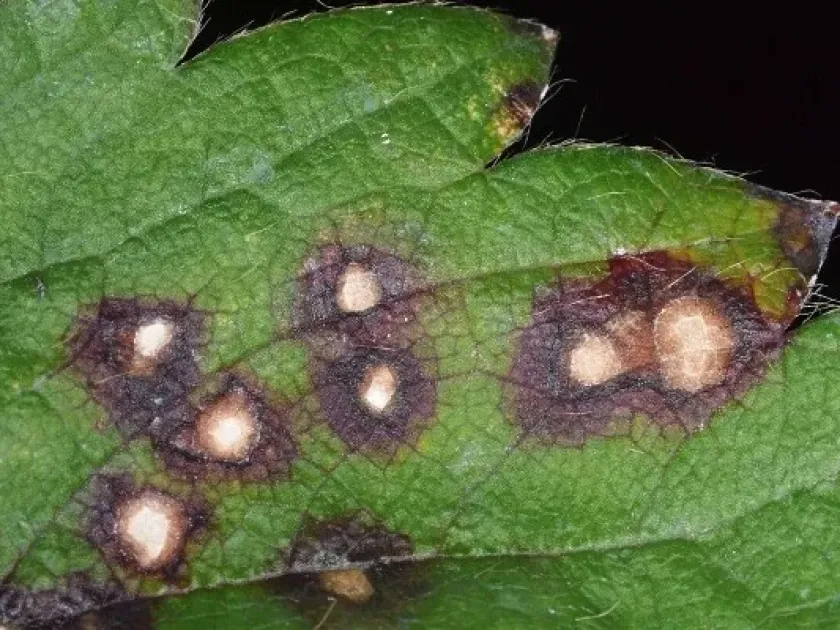
Description
Symptoms
Symptoms typically begin as small, indistinct spots on the leaflets, which gradually enlarge into angular or rounded lesions with pale centers.
A distinctive feature is the appearance of a white, powdery fungal growth on the underside of the leaves, which corresponds to the sporulation structures of Ramularia galegae.
In advanced stages of the infection, lesions may coalesce, leading to severe chlorosis and necrosis of the entire leaf, followed by premature defoliation.
Stems and petioles can also be affected, displaying elongated dark-brown necrotic streaks, which may weaken the structural integrity of the plant.
- Circular spots with light halos.
- White fungal mat on the abaxial leaf surface.
- Premature yellowing and leaf drop.
- Stunted growth of the stems.
Pathogen
The disease is caused by the fungus Ramularia galegae, an imperfect fungus that targets forage legumes, particularly the Eastern goat's rue (Galega orientalis).
The fungus overwinters as mycelium and conidia in infected plant debris, remaining viable in the soil or on the surface of stubble until the following growing season.
Conidia are dispersed through wind currents and splashing water, landing on healthy plant parts and initiating new infection cycles during periods of high humidity.
Once settled, the fungus germinates and penetrates the leaf epidermis through stomata or mechanical injuries, eventually colonizing the intercellular spaces of the host tissue.
This pathogen demonstrates a high level of host specificity, focusing its reproductive efforts on the specific tissues of the goat's rue plant to maximize nutrient uptake.
Conditions for development
Cool to moderate temperatures combined with high humidity are the primary drivers for the development and spread of Ramularia galegae.
Frequent rainfall or persistent morning dew creates a surface film of water on leaves, which is essential for the germination of fungal conidia.
Dense, poorly ventilated canopy conditions favor the proliferation of the disease by maintaining a stable, moist microclimate favorable for fungal growth.
Prolonged growing seasons with moderate thermal regimes allow the pathogen to undergo multiple infection cycles, significantly increasing the inoculum density.
Plants under nutrient stress, particularly those lacking sufficient potassium, show increased susceptibility to infection compared to well-fertilized, vigorous stands.
Why it matters
The primary harm involves a substantial reduction in forage quality and biomass yield, as the plant loses its photosynthetic capacity due to massive defoliation.
Infected crops show lower crude protein and sugar content, making the harvested forage less desirable and potentially less digestible for livestock.
Weakened plants show reduced vigor during the winter dormancy period, increasing the likelihood of winter-kill and resulting in a sparse stand the following spring.
Seed production is negatively impacted as the pathogen affects flower development and pod filling, leading to lower quality and lower yields of planting material.
In severe cases, the field may require early harvest or complete renovation due to the diminished economic value of the diseased forage crop.
Protection
Crop rotation is the most effective preventative measure, as it prevents the buildup of soil-borne inoculum by introducing non-host species for several years.
Deep plowing of the field after harvest ensures that plant residues are buried, facilitating their rapid decomposition and reducing the pathogen's survival.
Selecting disease-resistant or tolerant cultivars is a crucial strategy for long-term management and maintaining high-quality forage production.
Maintaining appropriate plant density during sowing helps improve air circulation within the stand, reducing the humidity levels that trigger fungal sporulation.
Chemical control with fungicides is generally reserved for severe outbreaks, ensuring that all safety guidelines and pre-harvest intervals are strictly followed.
Discussion
No discussions yet — be the first.