
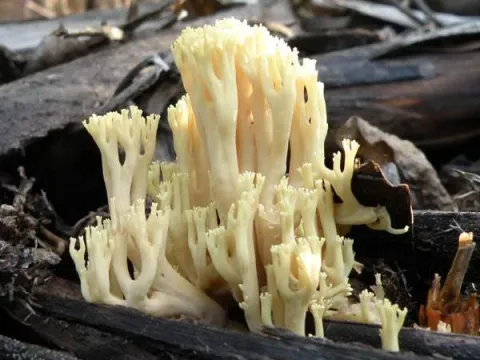
Upright coral fungus
Ramaria stricta
Upright coral fungus (Ramaria stricta) is a basidiomycete fungus known for its role as a saprotroph, primarily decomposing decaying wood in forested ecosystems.
What the section contains
Upright coral fungus
While typically considered a decomposer, it can adopt parasitic behavior when infecting trees that are already stressed or suffering from structural bark damage.
The fungus produces a mycelial network that infiltrates wood tissues, secreting enzymes that break down lignin and cellulose, which are essential for the structural integrity of the tree.
Its fruiting bodies are highly branched and coral-like in appearance, usually yellowish or tan, often found growing in tight clusters on logs or stumps.
Spore dispersal occurs primarily via wind, allowing the fungus to colonize new substrates through cracks, wounds, or deadwood surfaces whenever conditions allow.
The most visible sign of colonization is the presence of yellow, branched fruiting bodies growing directly from the base of the tree or from exposed woody tissue.
Infected wood exhibits signs of white rot, where the material becomes light-colored, spongy, and brittle as the fungal hyphae destroy the internal fibers.
Trees affected by this pathogen often show signs of crown dieback, thinning foliage, and reduced vigor, reflecting the impaired function of the root system or sapwood.
Peeling back the bark may reveal white, thread-like mycelial mats or rhizomorphs that signify the active spread of the fungus within the cambium layers.
As the infection progresses, the wood may split along the grain, significantly reducing the stability of the tree and increasing the risk of mechanical failure.
High moisture levels in both the soil and the air are essential for the growth of Ramaria stricta, favoring its proliferation in damp forest environments.
The fungus thrives in temperate climates, with optimal activity occurring during periods of mild temperature and high precipitation, often in the late summer or autumn.
Wounds caused by mechanical impact, animal feeding, or improper pruning serve as entry points that allow the fungus to bypass the tree's natural defenses.
Shaded, poorly ventilated areas with high levels of organic debris provide a steady supply of moisture and substrate for the fungus to establish itself.
Trees under abiotic stress, such as drought or nutrient deficiency, are significantly more susceptible to colonization compared to healthy, vigorous specimens.
The fungus causes substantial degradation of wood quality, rendering the tree commercially useless and creating serious structural safety hazards.
By compromising the integrity of the root crown and lower trunk, the pathogen significantly increases the likelihood of trees falling during storms or heavy wind.
Interference with the tree's vascular system disrupts the movement of water and nutrients, which ultimately leads to the progressive decline and death of the host.
The presence of this fungus in a landscape or orchard can create a lasting source of spores, threatening the health of nearby trees if preventative measures are not taken.
Loss of mature trees to Ramaria stricta reduces the ecological value of a site and requires costly tree removal to prevent damage to surrounding infrastructure.
Effective management begins with strict sanitation, including the removal of dead stumps, fallen logs, and woody debris that serve as the primary fungal reservoir.
All pruning should be performed using sanitized tools, and any significant wounds on the bark should be protected with appropriate fungicides or wound-sealing agents.
Promoting tree vitality through proper irrigation, mulching, and fertilization helps the tree naturally resist colonization by opportunistic wood-rotting fungi.
Regular inspections are vital; any detected decay should be managed by carefully removing affected wood back to healthy tissue and ensuring the site is kept dry.
- Regular monitoring of tree trunks for fungal fruiting bodies.
- Disinfection of pruning equipment between different trees.
- Avoidance of mechanical wounding of the bark during lawn maintenance.
- Improvement of soil drainage to reduce ambient humidity near the base of trees.
- Use of biological control agents where applicable to suppress fungal growth.