
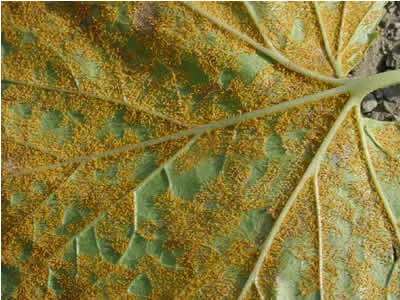
Urediniospore stage of rust
Uredo
Description
Symptoms
The primary symptom is the appearance of small, powdery pustules with a rusty-orange or reddish-brown color on the leaves, stems, and leaf sheaths.
When touched, these pustules release a dust-like cloud of spores, which is a diagnostic feature of the rust disease group.
As the infection progresses, the pustules merge, causing the leaves to yellow, wither, and die prematurely due to nutrient and water loss.
The damage to the epidermis disrupts the plant's physiological functions, severely inhibiting its ability to perform photosynthesis efficiently.
- Brightly colored pustules on foliage.
- Powdery spore accumulation upon contact.
- Early leaf senescence and necrosis.
Pathogen
The urediniospore stage is the most critical phase in the life cycle of rust fungi (order Pucciniales), which is responsible for the rapid spread of the disease during the growing season.
The pathogens causing this stage are obligate parasites that primarily affect cereal crops, such as wheat, barley, rye, and oats.
This stage is characterized by the formation of asexual spores called urediniospores, which are capable of reinfecting host plants multiple times within a single season.
The fungus develops inside the plant tissue, creating structures known as uredinia, which break through the leaf epidermis to release spores into the atmosphere.
Biologically, this stage acts as an engine for the mass proliferation of the fungus, leading to devastating epidemics in agricultural fields.
Conditions for development
The development of the urediniospore stage is highly dependent on moderate temperatures, typically ranging from 15°C to 25°C.
High relative humidity and the presence of liquid water, such as dew, rain, or fog on the plant surface, are essential for the germination of urediniospores.
Since the spores are extremely light, they can be transported by wind currents over hundreds of kilometers, facilitating the regional spread of the pathogen.
Densely planted crops and excessive nitrogen applications create a favorable microclimate within the canopy, promoting the rapid multiplication of the fungus.
Under optimal conditions, the pathogen can complete its reproductive cycle in as little as 7–10 days, allowing for exponential disease growth.
Why it matters
The primary impact of the disease is a significant reduction in the green leaf area, which directly results in lower grain yield and poor quality.
Plants affected by rust produce shriveled kernels with a low bushel weight, which negatively affects milling and baking performance.
Severely infected crops become stressed and more susceptible to secondary infections, environmental pressure, and various pests.
Economic losses due to rust epidemics can be severe, often resulting in yield reductions of 50% or more if left untreated.
The cumulative damage weakens the entire crop, leading to financial losses for farmers and reduced food security for affected regions.
Protection
The cultivation of resistant crop varieties remains the most effective and sustainable strategy for preventing rust infections in the field.
Application of systemic fungicides at the first sign of pustules is crucial to halt the spread of the disease and protect the remaining foliage.
Good agricultural practices, such as controlling volunteer cereal plants and crop debris, help reduce the initial inoculum level in the area.
Balanced fertilization and appropriate planting density can create a less hospitable environment for the fungus to establish and propagate.
Systematic field monitoring and early detection allow for timely protective interventions, ensuring that crop damage is kept to a minimum.
Discussion
No discussions yet — be the first.