
Raffaelea
Raffaelea
Raffaelea is a genus of microscopic fungi belonging to the order Ophiostomatales. These fungi are well-known for their symbiotic relationship with ambrosia beetles, particularly those in the subfamily Scolytinae.
What the section contains
Raffaelea
The fungus acts as a pathogen that colonizes the xylem (water-conducting tissue) of the host plant. It is introduced into the tree by beetles during their boring activities, where it then spreads through the vascular system.
The most infamous species is Raffaelea lauricola, the primary agent of laurel wilt, which has caused massive destruction in populations of plants belonging to the family Lauraceae.
The pathogenicity of Raffaelea is characterized by the production of toxins and the proliferation of mycelium, which physically blocks the transport of water throughout the plant.
The fungal life cycle is dependent on the beetles, which carry the spores in specialized body structures called mycangia, ensuring the pathogen reaches new host trees.
The initial symptom of Raffaelea infection is the rapid yellowing and subsequent browning of leaves, which often wilt and remain attached to the branches for a significant time.
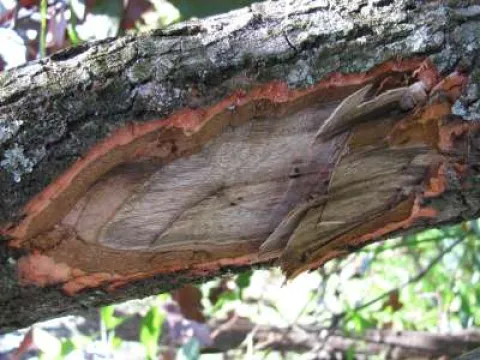
Upon removing the bark, one can observe dark, necrotic streaks within the sapwood, which are clear indicators of the fungus actively colonizing the tree's vascular tissues.
Entrance holes created by the ambrosia beetles are a critical diagnostic feature; these are usually very small and are often accompanied by frass (wood dust) pushed out by the insects.
The tree experiences a rapid decline in vigor, leading to crown dieback. Death can occur extremely quickly, sometimes within just a few weeks of the first visible symptoms.
Internal examination of infected wood reveals a distinct staining of the xylem, confirming the presence of the pathogen as it chokes off the tree's nutrient supply.
The development of Raffaelea is tightly linked to the life cycle of its beetle vector. Warmer temperatures favor both beetle activity and the rapid growth of the fungus within the wood.
Moist environments can occasionally exacerbate the stress on trees, but the primary driver of infection is the presence of an active beetle population looking for host trees.
Trees that are already stressed due to drought, physical trauma, or soil compaction are significantly more susceptible to successful beetle colonization and fungal inoculation.
Human activity is a major driver of spread; the transport of infested firewood, logs, or nursery stock is the leading cause of the disease appearing in new, distant locations.
Once the spores are introduced into the sapwood, the fungus spreads through the water-conducting system, causing a systemic infection that is difficult for the tree to contain.
Raffaelea is highly dangerous because it causes high mortality rates in specific tree species, often killing trees much faster than other common forest pathogens.
By obstructing the vascular system, the fungus forces the plant into a state of drought stress, which is irreversible once the disease has progressed significantly.
The economic and ecological impact is severe, particularly in forest ecosystems, nurseries, and managed landscapes where host trees are essential components.
The loss of specific tree species due to Raffaelea can lead to the degradation of entire habitats, negatively impacting local wildlife that depends on those trees for food or shelter.
There are currently very few effective chemical controls for trees that have already been infected, making the disease a significant threat to conservation efforts.
Strict quarantine measures on the movement of woody material, including firewood and live plants, are essential to prevent the spread of Raffaelea to uninfested areas.
Early detection is vital; surveillance programs should be implemented to identify infested trees quickly so they can be removed before the beetle population spreads further.
Sanitation involves the prompt felling, chipping, or burning of infected trees to eliminate the source of spores and reduce the number of beetles emerging from the wood.
While experimental systemic fungicides exist, their use is generally limited to highly valued individual landscape trees rather than forest-scale application.
- Removal and destruction of infested wood.
- Implementation of quarantine regulations.
- Monitoring using pheromone-based traps.
- Raising public awareness about not moving firewood.