
Sesbania rust
Puccinia telimutans
The disease is caused by the obligate parasite Puccinia telimutans, a specialized fungus belonging to the order Pucciniales (rust fungi). This pathogen relies entirely on living plant tissues to complete its biological cycle.
What the section contains
Sesbania rust
The fungus is characterized by its ability to produce various spore stages, which allows it to persist in the environment under changing conditions. Urediniospores are the primary means of rapid disease dissemination.
Upon landing on a susceptible host, the spore germinates, penetrates the epidermis through stomata, and develops an extensive intercellular mycelium. This mycelium extracts nutrients directly from the plant cells.
As the fungus matures, it forms complex fruiting bodies that break through the plant surface. This process facilitates the release of massive amounts of inoculum into the air for further infection cycles.
Puccinia telimutans is highly host-specific, primarily targeting species within the Sesbania genus, which makes disease management centered on host resistance particularly effective.
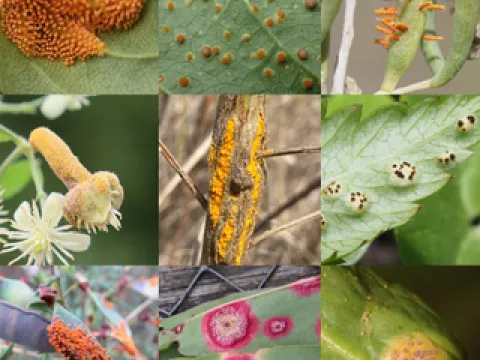
The characteristic symptoms of Sesbania rust include the appearance of small, raised pustules (uredinia) on the foliage, petioles, and young stems. These pustules are typically orange to rust-brown in color.
As the infection progresses, these pustules rupture the plant epidermis, revealing a dusty mass of spores. This powdery residue is easily brushed off and spread by wind or water splashes.
Leaves affected by heavy infestation may turn yellow (chlorosis) and wither prematurely. Extensive defoliation can occur, leaving the plant skeletal and significantly reducing its photosynthetic capacity.
On stems, the pustules may coalesce into elongated, dark streaks. This structural damage can lead to lodging or the stunting of affected branches, especially in dense plantings.
Late in the season, the pustules may transition to a darker, brownish-black color, marking the production of teliospores, which are the resting stage of the pathogen.
The development of rust is heavily dependent on favorable environmental conditions. High relative humidity and temperatures between 18°C and 25°C are ideal for spore germination.
Periods of prolonged leaf wetness, such as morning dew, mist, or frequent rainfall, are critical for the fungus to initiate infection. The presence of water droplets allows the spores to survive and penetrate the host.
Poorly ventilated fields with dense crop canopy create a stagnant microclimate that retains moisture longer, significantly increasing the probability of a severe rust outbreak.
Stress factors, such as soil nutrient deficiencies or drought, can weaken the plant's natural defense mechanisms, making it more susceptible to colonization by the fungal mycelium.
While warm weather promotes rapid cycles of the disease, excessive heat and very dry conditions can temporarily suppress the pathogen's ability to infect new tissues.
Sesbania rust causes significant economic losses by reducing both biomass production and seed yield. The destruction of leaf tissue directly impacts the plant's energy production and growth rate.
Infected plants exhibit reduced vigor and premature senescence. The loss of leaves significantly impairs the quality of the crop, especially if it is intended for forage or green manure purposes.
The pathogen drains metabolic resources from the plant, causing stunted growth and poor pod development. This systemic drain on energy makes the plant unable to recover effectively.
Rust-infected plants are often more prone to secondary infections by opportunist pathogens and may show increased susceptibility to insect herbivory due to impaired chemical defenses.
Widespread outbreaks can devastate a harvest, leading to decreased field quality and increased costs associated with potential rescue fungicide applications.
The most effective strategy for managing Sesbania rust is the use of disease-resistant varieties. Planting resistant germplasm significantly reduces the need for chemical interventions.
Implementing a proper crop rotation schedule helps break the infection cycle by depriving the fungus of its primary host for several consecutive growing seasons.
Sanitation practices, such as the removal or deep incorporation of crop residues into the soil, are essential to minimize the primary inoculum source for the following season.
Managing planting density to ensure adequate airflow within the canopy helps keep foliage dry, thereby creating a less favorable environment for spore germination.
In cases of severe infestation, the application of systemic fungicides may be necessary. It is crucial to scout fields regularly and apply treatments early at the first appearance of pustules.