
Common reed rust
Puccinia phragmitis
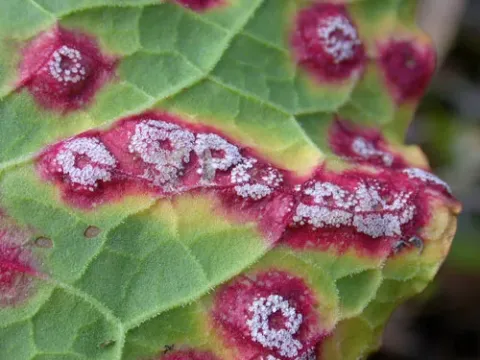
The primary symptom of this disease is the appearance of rust-colored pustules, known as uredinia, on the leaves and stems of the common reed.
What the section contains
Common reed rust
In the early stages, small chlorotic spots develop on the leaf blades, which expand as the fungus begins to produce spores beneath the epidermis.
Eventually, the epidermis ruptures, exposing a powdery mass of spores that can easily be dispersed by wind or physical contact.
Towards the end of the growing season, these pustules turn dark brown or black as the fungus shifts to producing teliospores for overwintering.
Severe infections cause premature yellowing, wilting, and necrosis of the foliage, significantly reducing the vigor of the affected reed beds.
The disease is caused by the rust fungus Puccinia phragmitis, which is classified within the Basidiomycota phylum.
This pathogen is heteroecious, meaning it requires two different host species to complete its complex biological life cycle.
The life cycle involves several spore stages, with alternate hosts typically being plants within the Polygonaceae family, such as docks or sorrels.
Urediniospores serve as the repeating stage of the fungus, allowing it to spread rapidly across reed populations throughout the summer months.
The ability of the fungus to survive winter as hardened teliospores ensures its persistence in the environment year after year.
Reed rust thrives in environments with high humidity, particularly in marshlands, wetlands, and areas surrounding lakes and rivers.
Moderate temperatures ranging from 15 to 25 degrees Celsius provide the ideal metabolic rate for the rapid germination of fungal spores.
Persistent moisture, such as heavy dew or frequent rainfall, is essential for spores to germinate and penetrate the host tissue successfully.
Poor air circulation within dense, overgrown reed beds creates a stagnant microclimate that encourages the spread of the fungal pathogen.
Dry weather conditions with low humidity act as a limiting factor, significantly reducing the potential for widespread infection outbreaks.
The disease causes significant physiological stress to the reed plants, reducing their photosynthetic capacity and overall health.
In commercial applications, rust infection renders the reed stems brittle and less suitable for traditional uses such as thatching or construction.
Large-scale outbreaks can negatively impact the aesthetic and ecological value of wetland habitats, altering local biodiversity.
Weakened reeds are more susceptible to secondary pathogenic attacks and herbivory, leading to further decline in population density.
Long-term infestation can lead to the deterioration of reed stands, affecting soil stability and the habitat quality of the surrounding ecosystem.
Managing the alternate host plants in proximity to the reed beds is a fundamental strategy for disrupting the fungus's life cycle.
Sanitation practices, such as removing and destroying infected plant debris, help to reduce the primary inoculum load for the following season.
Maintaining proper spacing and managing vegetation density can improve airflow, creating a less hospitable environment for the fungus.
While chemical fungicides are rarely used in wild ecosystems due to aquatic risks, they may be utilized in controlled nursery or ornamental settings.
Regular surveillance of reed stands is crucial for early detection, allowing for quick response measures before the infection spreads extensively.