
Description
Symptoms
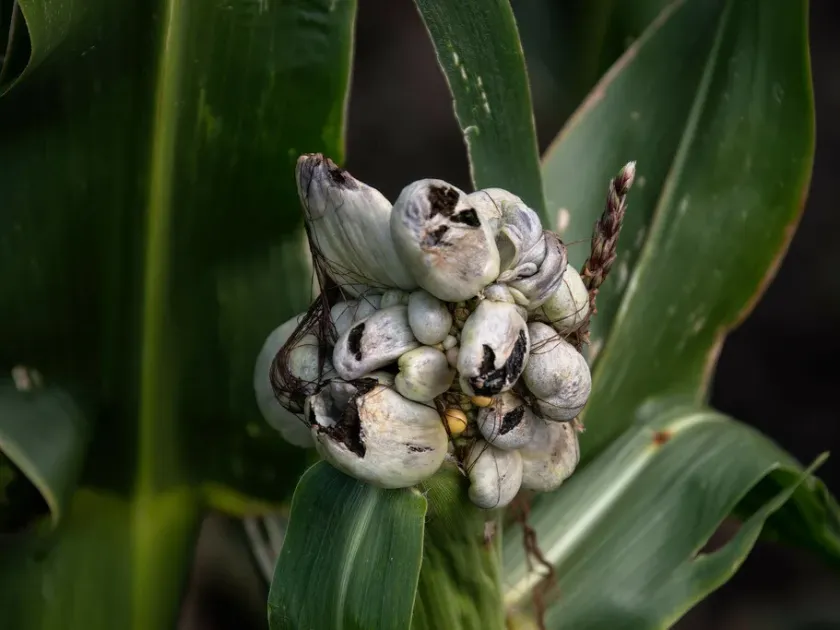
The most distinctive sign of common smut is the development of tumors or galls that appear on leaves, stems, tassels, and ears.
Young galls are initially covered by a white or silvery, glistening membrane that later turns gray or black as it matures.
When the galls reach maturity, the membrane ruptures, releasing a thick, black, powdery mass of teliospores into the environment.
In affected ears, individual kernels can be replaced by these large, unsightly smut galls, causing severe distortion of the entire structure.
Plants affected during early development stages often exhibit stunting, leaf curling, and overall reduction in plant vigor.
Pathogen
Common smut is caused by the basidiomycete fungus Ustilago maydis, a specialized pathogen that affects exclusively maize crops.
The fungus survives in the soil and on crop debris as teliospores, which remain viable and capable of infection for several years.
Infection occurs when fungal spores enter through wounds or natural openings in plant tissues, often caused by physical damage or insect activity.
Once inside, the fungus manipulates the plant's growth hormones, triggering rapid cell division and expansion, leading to the formation of galls.
The disease cycle concludes with the development of dark, powdery spores that are dispersed by wind, rain, and machinery to new plants.
Conditions for development
The infection is most prevalent in warm climates with temperatures between 20°C and 30°C, combined with moderate to high humidity.
Dry weather periods during the growing season can also promote infection by causing mechanical stress and micro-cracks in plant tissues.
High levels of nitrogen fertilization encourage rapid, succulent plant growth, which is much more susceptible to fungal entry and colonization.
Agricultural practices that result in physical injury to the maize plant, such as improper cultivation or weeding, significantly increase disease incidence.
Poor airflow within dense crop stands creates a microenvironment that facilitates the germination of spores and the spread of the fungus.
Why it matters
Common smut causes direct economic losses by reducing both the quality and quantity of the grain yield, as infected ears are often total losses.
In addition to grain yield reduction, systemic infection can lead to reduced biomass production, which impacts the nutritional value of silage.
The presence of smut spores in harvested grain can cause significant quality downgrading, making the corn unsuitable for various food markets.
The disease contributes to an increasing buildup of fungal inoculum in the field, which requires longer intervals between maize plantings.
In severe cases, plants may be weakened to the point of lodging, making mechanical harvesting difficult and inefficient.
Protection
The primary and most effective control measure is the use of disease-resistant maize hybrids adapted to local growing conditions.
Implementing a crop rotation system is essential to reduce the concentration of fungal spores in the soil over time.
Sanitation practices, including the removal and destruction of infected plants, help to lower the immediate inoculum levels in the field.
Effective pest management is crucial, as controlling insects that cause plant damage drastically reduces the entry points for the fungus.
Maintaining optimal soil fertility and avoiding excessive nitrogen applications helps strengthen plant cell walls, increasing natural resistance.
Pathogens and affected parts
Affects crops · 1
Discussion
No discussions yet — be the first.