
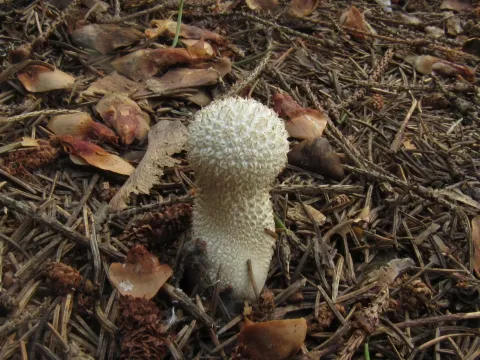
Common puffball
Lycoperdon perlatum
Lycoperdon perlatum, commonly known as the common puffball, is a basidiomycete fungus. It is essential to clarify that it is not a plant pathogen and does not cause diseases in crops.
What the section contains
Common puffball
This fungus is a saprotroph, meaning it derives its nutrition from decaying organic matter. It acts as a decomposer, breaking down plant debris, twigs, and leaves into organic components.
Unlike parasitic fungi that invade living plant tissues, the puffball remains in the soil or on dead wood. It lacks the ability to penetrate healthy roots, stems, or leaves of agricultural plants.
In agronomy, it is classified as a beneficial decomposer. It helps in the process of mineralizing organic substances, making nutrients more accessible for future plant growth.
Attributing plant diseases to Lycoperdon perlatum is scientifically inaccurate. Its presence is a sign of a biodiverse and nutrient-rich soil environment rather than an indication of a disease outbreak.
The development of Lycoperdon perlatum fruiting bodies is heavily dependent on soil moisture and high humidity. They typically emerge during the wet months of summer and autumn.
These fungi thrive in soils rich in organic content, particularly in areas covered with wood chips, forest soil, or abundant leaf litter. They require shade and moderate temperatures to flourish.
The ideal temperature range for mycelial growth is between 15°C and 22°C. The fungus is well-adapted to surviving underground during less favorable weather conditions by remaining in its vegetative state.
Spores are spread primarily through mechanical disturbance or rainfall, which ejects them from the mature puffball. They can travel significant distances via wind currents to find new habitats.
The appearance of puffballs is a reliable indicator of healthy, decomposing organic material in the soil, which is a positive trait for any fertile garden plot.
Common puffballs do not pose a threat to agricultural crops. They are harmless organisms that do not interfere with the life cycle or health of vegetables, fruits, or cereals.
While they may grow in garden beds, they do not compete with crops for resources in a detrimental way. They are simply part of the soil food web, contributing to the breakdown of organic waste.
There is no evidence of these fungi causing wilting, rot, or any form of necrosis in plants. Any plant failure in areas where puffballs grow is caused by other factors, not by the fungus itself.
Using chemical treatments to eradicate these mushrooms is unnecessary and potentially harmful to the overall soil microbiome, which is essential for healthy plant development.
The harm caused by puffballs is negligible, often limited to temporary aesthetic concerns in landscaping or specific garden designs where uniformity is required.
No specific control measures are needed for Lycoperdon perlatum as it is not a pest. Good horticultural practices, such as maintaining proper aeration and managing organic matter, are sufficient.
If their presence is undesirable, simple mechanical removal of the fruiting bodies and reducing excessive wood mulch will limit their habitat and decrease future growth.
Proper drainage of garden beds prevents the moisture buildup that puffballs prefer. Improving airflow and sunlight penetration can also create a less hospitable environment for these fungi.
Avoid the use of fungicides, as they will disrupt the beneficial fungal and bacterial life in the soil that is necessary for natural disease suppression and nutrient cycling.
The most effective management approach is to appreciate the puffball's role in the ecosystem. Managing soil organic matter through proper composting ensures that fungal growth is balanced and productive for your garden.