
Common leaf spot of clover
Pseudopeziza trifolii
Description
Symptoms
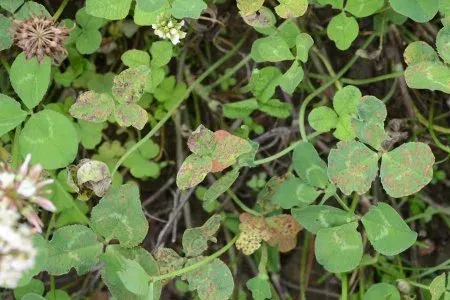
Symptoms appear as small, circular, dark brown to black spots scattered across the surface of the clover leaves, typically visible on both sides of the leaf blade.
A distinctive diagnostic feature is the small, raised, cushion-like structure (apothecium) that develops in the center of each spot, appearing as a tiny, shiny dark disc.
As the disease progresses, these individual spots may enlarge and merge, causing significant tissue necrosis and turning the entire leaf yellow before it eventually dries up.
The lower leaves of the plant are usually affected first due to higher humidity levels and restricted air movement near the ground level.
In cases of heavy infestation, infected leaves wither and fall prematurely, resulting in sparse foliage and stunted plant growth during the active development phase.
Pathogen
The causal agent of this disease is the fungus Pseudopeziza trifolii, which is a specialized parasite infecting various clover species throughout their growing season.
The fungus develops small apothecia, which act as fruiting bodies. These structures produce ascospores that are dispersed by wind and splashing raindrops to spread the infection.
The pathogen primarily overwinters as mycelium in dead plant tissues, leaf litter, or on remaining stubble, serving as the primary inoculum for the next season.
After landing on a susceptible leaf, the spores germinate and penetrate the epidermal layer, establishing an infection site where the fungus absorbs nutrients from the host cells.
The life cycle is closely synchronized with the moisture levels of the field, as the fungus requires high humidity for the successful maturation and release of its reproductive spores.
Conditions for development
The disease thrives in cool to moderate temperatures and high humidity, making spring and early autumn the most common periods for infection.
Frequent rainfall or persistent heavy dew provides the necessary film of moisture on leaves, which is crucial for the germination of the fungus spores.
Overcrowded or poorly ventilated fields create a microclimate that prevents foliage from drying out quickly, significantly increasing the rate of disease transmission.
Poor soil fertility, particularly a deficiency in essential nutrients like potassium, can make the clover plants more susceptible to initial infection.
Long periods of overcast weather coupled with high air humidity create an ideal environment for the rapid expansion of the pathogen throughout the forage field.
Why it matters
The primary damage is caused by the loss of photosynthetic area, which significantly reduces the accumulation of biomass and overall yield of the forage crop.
Nutritional quality is compromised because the leaves are the most protein-rich part of the plant; their loss reduces the value of the hay produced.
The disease weakens the plants, reducing their ability to accumulate root reserves, which leads to poor winter survival and decreased plant density in subsequent years.
Field stands affected by severe infection become thin, allowing opportunistic weeds to invade and further degrade the quality of the meadow or pasture.
Total productivity loss in severely infested stands can be substantial, leading to economic losses for farmers relying on high-quality forage for livestock feed.
Protection
Selecting and planting resistant or tolerant clover varieties is the most effective long-term management strategy to reduce the impact of the disease.
Implementing proper crop rotation helps minimize the buildup of the fungus in the soil, preventing direct transfer of the pathogen from old to new stands.
Timely harvesting of the clover before the disease becomes widespread can effectively remove the primary source of spores from the field.
- Optimizing fertilizer application to ensure strong, vigorous plant growth.
- Ensuring proper planting density to improve air circulation and reduce canopy humidity.
- Removing and destroying infected plant debris after the harvest season.
While chemical control with fungicides is technically possible, it is rarely used in forage production due to cost constraints and strict pre-harvest interval regulations.
Discussion
No discussions yet — be the first.