
Common stinkhorn
Phallus impudicus
Description
Symptoms
The initial sign of the fungus is the appearance of white, egg-shaped structures located partially or fully beneath the surface of the soil.
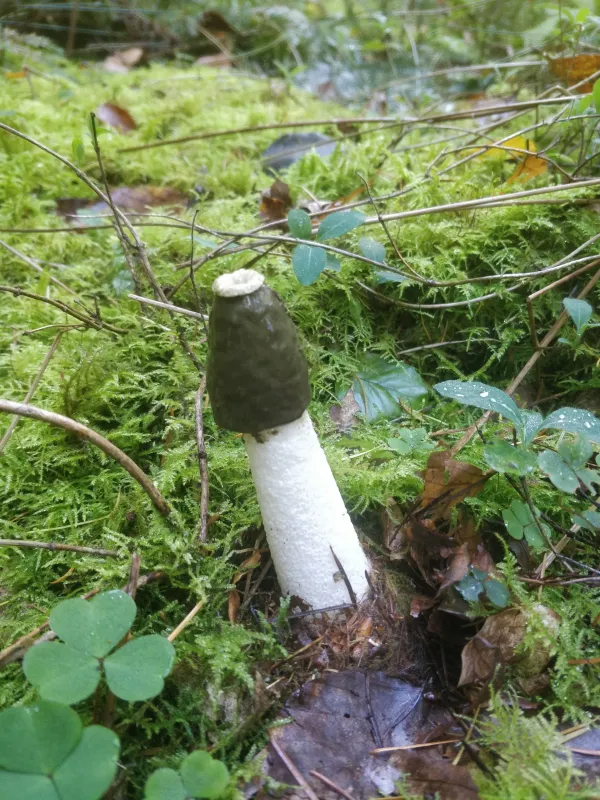
As the fungus matures, it produces a tall, porous stalk topped with a cap covered in an olive-green, slimy spore-bearing mass.
The slime emits a strong, foul odor resembling carrion, which serves to attract insects that aid in the dispersal of fungal spores.
White, root-like mycelial strands are often visible in the topsoil or near decaying wood, which can sometimes be mistaken for root-rot infections.
Unlike true pathogens, this fungus does not cause physiological damage such as wilting, chlorosis, or necrosis on neighboring plants.
Pathogen
Common stinkhorn (Phallus impudicus) is not a plant disease or a crop pathogen, as it does not parasitize living plant tissues.
It is classified as a saprotrophic fungus, meaning it thrives by breaking down dead organic matter, such as decaying wood and leaf litter.
The organism develops from an extensive network of mycelial cords buried deep within the soil or substrate, which facilitates nutrient cycling.
From an agronomical perspective, its presence is an indicator of organic-rich soil that is currently undergoing the natural decomposition process.
It maintains no harmful relationship with horticultural crops, and it lacks the mechanisms to infect roots, stems, or foliage of agricultural plants.
Conditions for development
Phallus impudicus requires high moisture levels and a substantial presence of decaying organic matter to initiate the development of fruiting bodies.
It is commonly found in shaded garden areas, woodland borders, or sites with poor soil aeration where moisture tends to accumulate.
Optimal growth occurs at mild temperatures between 15°C and 22°C, typically following heavy rainfall or during periods of high humidity.
Soils rich in humus or those containing buried wooden debris create the most favorable conditions for the rapid expansion of the fungal colony.
The fungus is most active during the warmer months, as the combination of temperature and substrate moisture triggers the emergence of reproductive structures.
Why it matters
The common stinkhorn is harmless to cultivated crops and plants, as it is strictly a decomposer of non-living material.
The only negative aspect for a gardener is the strong, unpleasant scent and the resulting influx of insects, which can be an annoyance.
It poses no threat to crop yield or health, and it does not require any form of chemical intervention or disease management strategy.
In some contexts, the appearance of this fungus highlights the presence of old stumps or rotting wood that might be an aesthetic concern for the landscape.
Essentially, the fungus plays a beneficial ecological role by breaking down cellulose and lignin, contributing to the fertility of the soil.
Protection
Since the organism is not a plant pathogen, the use of fungicides is unnecessary and could potentially disrupt the beneficial soil microbiome.
If the presence of the fungus is unwanted, the best approach is to clear the area of dead organic matter, such as old stumps and rotten branches.
Improving soil drainage and removing debris will naturally render the environment less hospitable to the development of fungal fruiting bodies.
Manual removal of the "eggs" before they sprout can prevent the rapid development of the foul-smelling mature stalks in garden beds.
Proper garden sanitation and regular maintenance of the soil surface are sufficient to prevent the development of this saprotrophic fungus.
Discussion
No discussions yet — be the first.