
Stem smut
Ustilago hypodytes
The causal agent of stem smut is the basidiomycete fungus Ustilago hypodytes, which is a specialized parasite affecting the stems of various cereal and grass species.
What the section contains
Stem smut
The fungus functions as an obligate parasite, living within the host plant tissues for most of its life cycle and developing as a systemic infection.
Its life cycle involves the production of teliospores, which rupture the host's epidermis to be dispersed by wind and rain, ensuring the spread of the disease to adjacent plants.
These spores are highly resilient, capable of surviving in the soil or on plant debris for several years, which makes the disease particularly persistent in affected fields.
Unlike many other smut diseases that target inflorescences, Ustilago hypodytes primarily colonizes the internodes and leaf sheaths, severely impairing the structural integrity of the stems.
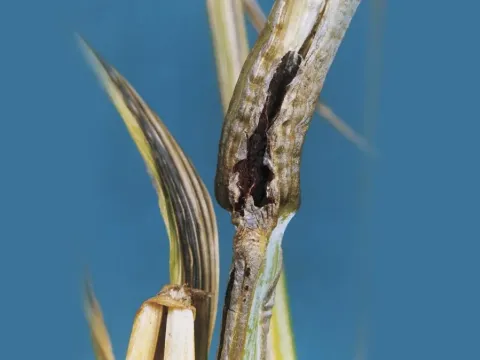
The primary symptom of stem smut is the appearance of dark, dusty, olive-brown to black spore masses along the internodes of the stems.
As the infection progresses, the epidermis of the plant splits open, exposing the fungal spores and giving the stem a charred or soot-covered appearance.
Infected plants often display severe stunting, stem twisting, or failure to produce a normal grain-bearing spike, leading to complete sterility in many cases.
The characteristic black streaks usually form under the leaf sheaths, gradually expanding and rupturing the tissue as the fungus reaches maturity.
Weakened stems frequently lead to lodging, making the crop appear messy and uneven, which is a distinct visual indicator of a widespread infection within the field.
Development of Ustilago hypodytes is favored by cool to moderate temperatures and high humidity, which are critical for the germination of spores.
Poor ventilation within dense crop stands and extended periods of dew or rain create an ideal microclimate for the fungus to establish itself.
The presence of infected crop residues from previous years serves as a primary inoculum source, especially in fields with reduced or no-tillage systems.
Conditions that stress the plant during early growth phases, such as poor soil nutrient status, may increase susceptibility to fungal colonization.
The pathogen spreads most effectively in environments where climatic conditions align with the susceptible stages of the cereal plant development.
The economic impact of stem smut is primarily driven by yield reduction, as the fungus competes for nutrients and disrupts the plant's vascular transport system.
Structural damage to the stem tissue often results in premature lodging, causing significant difficulty during mechanized harvesting and increasing total field losses.
Plants affected by the disease show a sharp decline in biomass production and grain filling, leading to smaller, lighter, and lower-quality seeds.
In cases of heavy infestation, entire crops can become unsuitable for commercial processing or livestock feed due to the contamination with spores.
The longevity of spores in the soil ensures that the disease can become a chronic issue, requiring long-term management strategies to maintain crop viability.
Effective management begins with robust crop rotation, ensuring that susceptible species are not planted in the same field for several consecutive years.
The use of certified, disease-free seed treated with appropriate systemic fungicides is essential to prevent initial infection and disease establishment.
- Deep plowing to bury infected residues and reduce the initial inoculum level.
- Strict sanitation practices, including the removal of infected weeds that harbor the fungus.
- Selection of cereal varieties that exhibit natural genetic resistance to smut species.
Applying systemic fungicides during the early stages of plant development can help suppress fungal growth within the host tissues.
Proper field management, including optimizing plant density and improving drainage, helps to create unfavorable conditions for fungal spore spread and colonization.