
Stemphylium leaf spot
Stemphylium eturmiunum
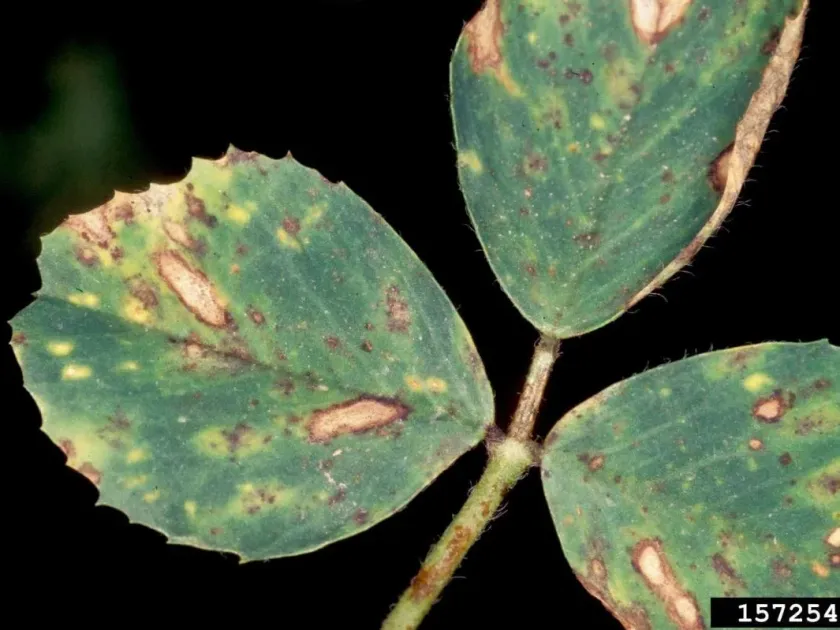
Description
Symptoms
Initial symptoms of Stemphylium leaf spot appear as small chlorotic lesions that gradually develop into brown or dark-colored spots. As the infection progresses, these spots expand, often assuming a rounded or angular shape characterized by distinct concentric rings.
The center of the necrotic tissue frequently exhibits an olive-black mold, which consists of a dense mass of fungal spores. The disease typically moves from the lower foliage upward, eventually encompassing the entire leaf canopy if left untreated.
Advanced stages of infection lead to the coalescence of spots, resulting in extensive leaf necrosis, premature wilting, and defoliation. In many crops, the fungus can also infect stems, flower stalks, and fruits, manifesting as deep ulcers or dry rot lesions.
A diagnostic indicator is the appearance of a pale halo surrounding the necrotic spot, caused by the localized action of fungal enzymes. Under high-humidity conditions, the infected plant parts may develop a grayish, fuzzy fungal growth.
Severe infection disrupts photosynthetic efficiency, causing the plant to lose turgor, cease growth, and in critical scenarios, die completely before the crop reaches physiological maturity.
Pathogen
The disease known as Stemphylium leaf spot is caused by various fungal species within the Stemphylium genus, with Stemphylium eturmiunum being a notable pathogen. These fungi are facultative parasites capable of surviving for long periods in the soil, on plant debris, and within seed lots.
The infection develops through the formation of mycelium and conidial spores, which are easily disseminated by wind, rain splashes, or insect vectors. The fungus penetrates plant tissues through stomata or mechanical wounds, systematically colonizing the intercellular spaces of the host.
The pathogen's life cycle is strictly dependent on moisture, which is necessary for spore germination and the development of new conidiophores. The fungus primarily overwinters as chlamydospores or mycelium within fallen leaves and stems of infected crops from previous seasons.
This fungus exhibits significant plasticity, allowing it to adapt to diverse climatic conditions across different geographical regions. Research indicates that the pathogen produces mycotoxins that accelerate tissue necrosis and compromise the host's innate immune system.
Accurate species identification often requires laboratory analysis, as visual symptoms can easily be confused with other leaf spot diseases such as Alternaria. Diagnosis relies on the microscopic examination of conidia, which possess a distinct dark pigmentation and transverse septa.
Conditions for development
The primary factor facilitating the development of Stemphylium leaf spot is high relative humidity (above 80%) coupled with free water present on leaf surfaces. Optimal temperatures for active mycelial growth range between +20°C and +28°C.
Frequent rainfall, fog, and heavy morning dews provide an ideal environment for mass spore production and rapid disease dissemination. Under these conditions, the incubation period can shorten significantly, potentially leading to epiphytotic outbreaks in fields.
Poor agricultural practices, such as high-density planting, insufficient airflow, and excessive nitrogen fertilization, increase host susceptibility. Plants stressed by drought or nutrient deficiencies are often the first to be colonized by the fungus.
The presence of susceptible host plants and weed reservoirs in the rotation cycle significantly increases the risk of soil-borne pathogen accumulation. The disease is particularly aggressive during the flowering and fruit-setting stages, when plant metabolic rates are at their peak.
In greenhouse settings, inadequate ventilation and condensation on structural surfaces promote disease development. Rapid temperature fluctuations leading to dew formation provide opportunistic entry points for the pathogen.
Why it matters
The primary damage caused by Stemphylium leaf spot is a dramatic reduction in the photosynthetic surface area, which leads to substantial yield loss. In both vegetable and technical crops, the infection results in reduced fruit weight, poor visual quality, and diminished shelf life.
For onion crops, the disease can lead to total crop failure by destroying leaves and the bulb neck. In tomatoes, the fungus infects both foliage and fruit, rendering the harvest unmarketable and unsuitable for processing.
Infection alters the biochemical profile of the produce, reducing levels of sugars, vitamins, and dry matter. Diseased plants become more vulnerable to secondary opportunistic pathogens, including bacterial rots, which further devastate the remaining plant organs.
Economic losses include high costs associated with repeated fungicide applications, which significantly increase production overheads. In the event of a severe epidemic, yield losses can exceed 50% in the absence of timely intervention.
The long-term survival of spores in the soil poses a persistent threat to subsequent seasons, forcing growers to implement costly changes in crop rotation or utilize soil fumigation techniques.
Protection
Effective control of Stemphylium leaf spot begins with strict crop rotation, ensuring that susceptible species are not grown on the same plot for at least 3-4 years. Deep plowing helps bury infected crop debris, promoting their rapid decomposition.
- Use of certified, disease-free seed and fungicide seed treatments.
- Balanced mineral nutrition, specifically monitoring potassium and phosphorus levels to enhance tissue strength.
- Regular weed management to eliminate alternative host reservoirs.
- Prompt removal and destruction of infected plant material.
- Strategic application of systemic fungicides, such as triazoles and strobilurins, at the first sign of symptoms.
Continuous field monitoring is recommended to determine the optimal timing for prophylactic spraying during favorable infection conditions. Rotating fungicide groups is essential to prevent the development of fungal resistance.
In greenhouse environments, maintaining an appropriate temperature-humidity balance, ensuring adequate ventilation, and avoiding overhead irrigation are critical. Utilizing resistant varieties and hybrids remains the most reliable and cost-effective long-term management strategy.
Discussion
No discussions yet — be the first.