
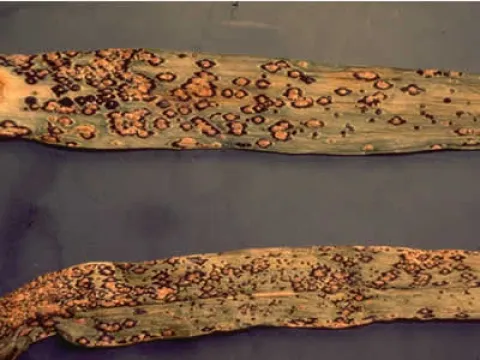
Bristlegrass rust
Puccinia chaetochloae
The causal agent of the disease is an obligate parasite, the fungus Puccinia chaetochloae. It belongs to the Basidiomycota division, Pucciniomycetes class, and is a highly specialized phytopathogen.
What the section contains
Bristlegrass rust
The life cycle of the bristlegrass rust pathogen typically involves the formation of various types of spores characteristic of rust fungi, including urediniospores and teliospores.
This microscopic fungus primarily infects the vegetative organs of plants, penetrating the host's epidermal tissues to obtain essential nutrients for its growth.
The pathogen persists in the soil or on plant debris and can overwinter in the teliospore stage, ready to germinate when favorable environmental conditions return.
The spread of the infection occurs mainly via the air, as spores are carried by the wind over significant distances, infecting new host plants in the area.
The primary symptom of infection is the emergence of characteristic pustules (uredinia) on the leaves and stems of bristlegrass, which have a rusty-brown or orange hue.
As the spores mature, the pustules rupture the plant epidermis, leading to sporulation, which appears visually as a dusty, rust-colored coating on the plant surface.
In later stages of the disease, telia (teliospores) form on the infected tissues, which eventually turn a darker, almost black color over time.
Affected leaves begin to turn yellow, curl up, and wither prematurely, which significantly reduces the total photosynthetic surface area of the weed.
In cases of severe infection, the growth of the entire plant is inhibited, leading to leaf deformation and a decrease in the reproductive capacity of the bristlegrass.
The development of Puccinia chaetochloae is facilitated by high humidity and the presence of free water (dew or rainfall) on the leaf surfaces.
The optimal temperature range for the germination of urediniospores is between +15°C and +25°C, which often coincides with the summer growing season.
Dense crop stands or weed patches create a favorable microclimate with high humidity, which contributes to the rapid dissemination of the infection.
Poor air circulation within the plant canopy accelerates the infection process, as fungal spores retain viability longer on moist plant tissues.
Periodic rainfall combined with warm nights creates ideal conditions for the mass epiphytotic development of bristlegrass rust in the fields.
Although bristlegrass rust primarily affects weeds, its presence in the agroecosystem can influence the competitiveness of weeds against the main crop.
The fungus depletes nutrient reserves in the bristlegrass tissues, disrupting water and mineral metabolism, leading to the weakening or death of the host plant.
In some cases, the disease may jump to cultivated cereals if the fungal species has a broad host range, posing a threat to the phytosanitary status of the fields.
Excessive reproduction of the pathogen on weeds increases the overall inoculum level in the area, requiring more intensive management in subsequent years.
The presence of rust makes it difficult to assess weed vigor, complicating weed control efforts from an agronomic management perspective.
Key control methods include maintaining a crop rotation, which limits the buildup of infectious inoculum in the top layer of the soil.
High-quality soil cultivation and the burial of plant debris play an essential role, as these residues serve as a substrate for the overwintering of fungal spores.
Timely herbicide applications against bristlegrass allow for the destruction of the host plant before the fungus reaches the stage of mass sporulation.
Using balanced fertilization helps cultivated crops develop more vigorously, allowing them to outcompete and suppress weeds affected by the disease.
In conditions with a high risk of spore spread, broad-spectrum fungicides can be applied to crops to reduce the density of the infectious background in the field.