
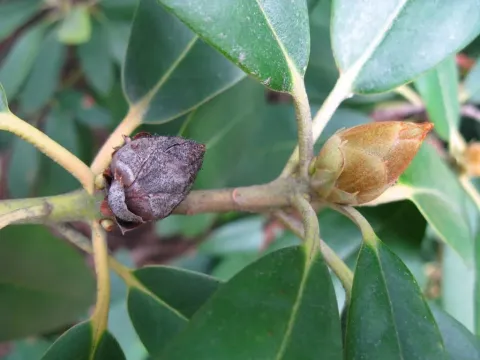
Briosia blight
Briosia
Briosia blight is caused by fungi of the genus Briosia. These pathogens belong to the group of imperfect fungi, which are characterized by specific asexual reproductive structures known as conidiophores.
What the section contains
Briosia blight
The fungus primarily targets woody plants, shrubs, and certain perennial crops. It establishes itself within the host's tissues, specifically impacting the stems, foliage, and fruits, which allows it to persist in the host for extended periods.
The biological cycle of Briosia involves the production of conidia that are easily dispersed by wind and water splash. This efficient method of transmission enables the fungus to colonize new plant parts rapidly.
As an opportunistic pathogen, it often overwinters in plant debris or on the surface of infected branches, waiting for favorable conditions to reactivate its life cycle in the spring.
Scientific identification of the specific Briosia species often requires laboratory analysis of spore morphology, as the visible symptoms can sometimes be confused with other necrotrophic fungal pathogens.
The most distinctive symptom of Briosia blight is the appearance of dark, velvet-like patches on the surface of leaves, branches, or fruit. These patches are dense clusters of fungal conidiophores.
On leaves, the infection manifests as irregular necrotic spots. As the fungus spreads, these spots enlarge and coalesce, often leading to total leaf necrosis and subsequent premature abscission.
Infected branches often develop depressed lesions or cracks in the bark. These can weaken the structural integrity of the branch and cause localized dieback due to disrupted nutrient transport.
Affected fruits show dark, sunken areas where the fungus has penetrated the epidermis. The underlying tissue softens and decays, making the fruit unmarketable and susceptible to secondary rotting organisms.
Young shoots may show signs of deformation or stunted growth. If the infection circles the stem, the entire portion of the branch beyond the lesion will typically wither and die.
Briosia blight thrives in environments characterized by high humidity and moderate temperatures. Prolonged rainy weather provides the surface moisture necessary for spore germination and tissue invasion.
Poor airflow within dense plantings or unpruned canopies is a significant contributor to the spread of the disease. Stagnant air keeps foliage wet for longer periods, facilitating fungal entry.
Mechanical damage to the plant—whether from pruning cuts, insect feeding, or environmental stress like hail—serves as a primary entry point for the pathogen.
The optimal temperature range for the development of Briosia species generally falls between 18°C and 25°C. Within this range, the pathogen can complete its infection cycle quite rapidly.
Irrigation practices that involve overhead watering during evening hours can create persistent leaf wetness, effectively creating an artificial environment for the disease to flourish.
The primary economic harm caused by Briosia blight is the loss of yield quality. Infected fruits are aesthetically unappealing and have a very short shelf life, leading to significant post-harvest losses.
Chronic infection results in reduced photosynthetic capacity due to leaf damage. This cumulative stress weakens the plant over several seasons, leading to reduced vigor and stunted annual growth.
The disease can cause the death of individual branches, which requires manual pruning and disposal, thereby increasing labor costs for orchard or garden maintenance.
Persistent blight infections reduce the overall vitality of the host, making it more susceptible to environmental stressors like drought, cold winters, or attacks by opportunistic secondary pests.
If left unmanaged, the blight can lead to the total collapse of the plant's structural health, necessitating the removal and replacement of infected specimens within a plantation.
Sanitation is the cornerstone of managing Briosia blight. All infected materials, including fallen leaves and pruned branches, must be removed and destroyed to minimize the inoculum load.
Proper pruning techniques are essential to maintain an open canopy. This promotes air circulation and light penetration, ensuring that foliage dries quickly after rain, which inhibits fungal growth.
Protective fungicide sprays, particularly those containing copper, are recommended early in the season to prevent primary infections from establishing on new growth.
Systemic fungicides should be employed upon the first observation of symptoms to curb the spread of the pathogen. Rotating chemical classes is crucial to prevent the development of resistant fungal strains.
Optimizing plant nutrition, especially potassium and phosphorus levels, strengthens the host's cell walls and boosts its natural defense mechanisms against fungal incursions.