
Brigantiaea
Brigantiaea
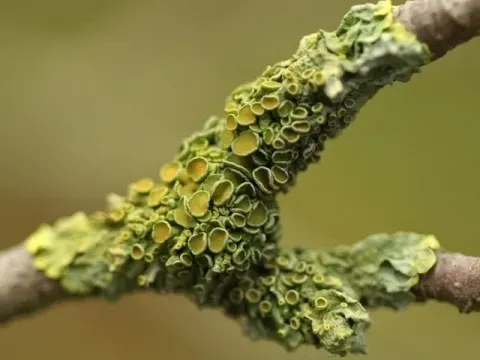
The genus Brigantiaea comprises a group of crustose lichens characterized by a thallus that adheres tightly to the substrate.
What the section contains
Brigantiaea
The appearance of the thallus ranges from smooth to finely granular, with colors typically appearing in shades of gray, yellow, or green.
A key morphological feature of this genus is the presence of apothecia, which often exhibit a vibrant or red-brown disk coloration.
The thallus is frequently bordered by a distinct prothallus, which can contrast with the central part of the lichen in pigmentation intensity.
The internal structure is typical for crustose lichens, featuring green algae as the primary photobiont embedded within the fungal tissue.
Brigantiaea is not a plant pathogen and does not cause diseases in agricultural crops or forest trees.
These organisms belong to the family Brigantiaeaceae and live in a mutually beneficial symbiosis with photosynthetic algae.
They are strictly epiphytic, using the surface of bark or rock outcrops as a physical anchor for growth rather than a nutritional source.
Their metabolism is focused on photosynthesis and the absorption of water, mineral salts, and gases directly from the atmosphere.
They do not produce toxins or enzymes capable of decomposing plant tissues or inducing necrotizing lesions in host plants.
Lichens of the genus Brigantiaea favor humid forest ecosystems that maintain high air quality levels.
They require a stable range of atmospheric humidity for optimal growth, which explains their frequent occurrence in coastal or mountainous regions.
These lichens are sensitive to air pollution, particularly sulfur dioxide, making them reliable indicators of environmental health.
Light levels significantly influence their metabolic rate, with most species preferring filtered or moderate light within the forest understory.
Temperature fluctuations directly affect their growth rates, with many species being well-adapted to cool, temperate climates.
From an agronomic perspective, Brigantiaea poses no threat to crop yield or plant health as it is neither a pest nor a disease agent.
Their presence on the bark of fruit trees is often misinterpreted by growers as a harmful condition, but they have no parasitic impact on the host.
They do not tap into the tree's sap or damage the cambium layer, maintaining a neutral presence in the orchard's complex ecosystem.
Instead, a diverse lichen community is often a positive indicator of an environment free from heavy industrial pollution.
Only in extreme cases of dense coverage might they visually obscure the bark surface, making it harder to spot cracks or mechanical damage.
No targeted protection measures are needed for Brigantiaea as these organisms are not harmful to plants.
If cleaning of the trunks is desired for aesthetic reasons, simple mechanical brushing is sufficient to remove the lichen growth.
Applying a lime wash to trunks in young orchards can prevent the early colonization of bark by various lichen species.
Standard orchard management practices, such as proper pruning for improved air circulation, can reduce the humidity required for lichen colonization.
Fungicides applied for disease control may incidentally affect lichens, but they should never be used specifically to target this genus.