
Bromegrass leaf spot
Pyrenophora bromi
The disease is caused by the ascomycete fungus Pyrenophora bromi (anamorph Drechslera bromi), which is highly specialized for infecting various species of Bromus grass.
What the section contains
Bromegrass leaf spot
The fungus overwinters as mycelium and pseudothecia on crop debris and in infected seeds. This allows the pathogen to survive harsh winters and initiate infections in the spring.
Infection begins when ascospores are discharged from pseudothecia on old leaves and blown onto healthy emerging foliage during wet weather.
As the season progresses, the fungus produces conidia on current-season lesions, facilitating the rapid spread of the pathogen within the field.
The pathogen secretes enzymes and toxins that degrade plant tissue, leading to chlorosis and subsequent necrosis as the mycelium colonizes the leaf cells.
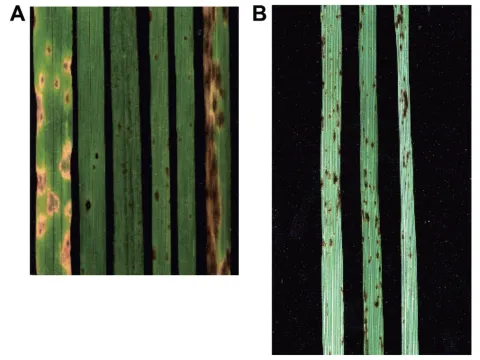
Initial symptoms manifest as small, dark brown spots that expand along the leaf veins, frequently forming characteristic elongated, dark brown lesions.
A distinct yellow halo (chlorotic margin) is usually present around the lesions, serving as a reliable indicator of the fungal presence.
Under humid conditions, the centers of the lesions produce an olive-black fuzzy layer, which consists of the conidiophores and spores of the fungus.
Severe infection leads to widespread blighting of the leaves, starting from the lower canopy and progressing upward, which can affect the entire plant.
The necrosis eventually causes the leaves to dry out, shrivel, and drop prematurely, resulting in a brown and ragged appearance of the bromegrass stand.
The development of Pyrenophora bromi is highly dependent on moderate temperatures, typically within the range of 18°C to 22°C (64°F to 72°F).
High relative humidity and frequent rainfall are critical, as the fungus requires a film of surface water for the spores to germinate and infect the leaves.
Extended periods of cool, cloudy, and wet weather during the spring promote the buildup of initial inoculum from overwintering sites.
Dense stands of grass limit air circulation, maintaining high humidity levels within the canopy and favoring the rapid spread of the disease.
Poor soil fertility, particularly nitrogen deficiency, increases the plant's susceptibility to leaf spot diseases and reduces its recovery rate.
Leaf spot significantly reduces the photosynthetic area of the plant, leading to stunted growth and reduced biomass yield in forage crops.
The quality of hay is compromised, as infected leaves have lower nutritional value and lower palatability for livestock due to fungal toxins and tissue damage.
In seed production fields, the disease can cause shriveled seeds with poor germination rates and serve as a vector for transmitting the pathogen to new areas.
The loss of vigor due to the infection makes the grass stand more susceptible to environmental stresses such as drought or severe winter conditions.
Continuous grazing or harvesting without adequate recovery periods can exacerbate the damage, leading to the eventual thinning of the stand.
The most effective management strategy is to utilize resistant or tolerant cultivars that are well-adapted to the local climate.
Sanitation is crucial; removing or burying infected crop residues significantly reduces the primary inoculum source for the following season.
Implementing proper pasture management, such as timely mowing and avoiding overgrazing, helps maintain a healthy and vigorous grass stand.
Providing balanced fertilization promotes plant health, enabling the crop to better withstand infection and recover from fungal pressure.
In critical seed production scenarios, the application of fungicides may be necessary if weather conditions favor an early and severe disease outbreak.