
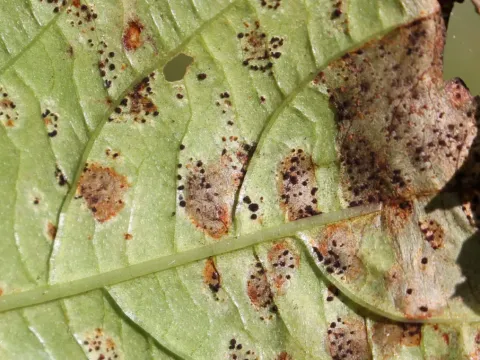
Silver rust
Puccinia argentata
The disease is caused by the fungus Puccinia argentata, a member of the diverse order Pucciniales.
What the section contains
Silver rust
It is an obligate parasite, meaning it requires living host tissue to complete its life cycle and thrive.
The pathogen is primarily known for attacking plants within the genus Impatiens, significantly affecting their health.
The life cycle involves the production of different spore types, which allows the fungus to survive and spread during various seasons.
The fungus is often characterized by its complex biology, often requiring alternate hosts to maintain its presence in an ecosystem.
The most distinctive symptom of silver rust is the formation of small, clustered pustules on the undersides of the leaves.
The spore masses within these pustules may appear silver or light brown in color, distinguishing it from other common rust species.
Yellowish spots often manifest on the upper side of the leaf, directly corresponding to the fungal infection site on the reverse side.
As the infection progresses, leaves may yellow, twist, and eventually wither, causing premature defoliation of the host plant.
Microscopic examination typically reveals ruptured epidermal layers, where the fungus has emerged to release its reproductive spores.
Environmental humidity plays a crucial role, as free moisture on leaf surfaces is necessary for spore germination.
Optimal temperatures for the fungus range between 15 and 22 degrees Celsius, favoring rapid incubation and infection cycles.
Crowded planting conditions prevent adequate airflow, causing humidity to linger and creating an ideal breeding ground for the pathogen.
Spore dissemination is facilitated by wind currents, splashing water, or handling, which transfers the fungus to healthy parts of the plant.
Prolonged periods of overcast weather or heavy morning dew significantly increase the risk of an outbreak in both field and greenhouse settings.
The pathogen causes significant damage by diverting nutrients away from the host plant, resulting in stunted growth and vigor.
Extensive colonization of leaf tissue impairs the plant's photosynthetic capacity, leading to a general decline in its physiological state.
In ornamental horticulture, the disease destroys the plant's aesthetic value, rendering it unfit for commercial sale or display.
The weakened host becomes highly susceptible to secondary infections by other fungi, bacteria, or common horticultural pests.
If left unmanaged, the cumulative impact of the disease can lead to the widespread death of plant populations within a garden or greenhouse.
The most effective strategy involves implementing rigorous sanitation practices, such as removing and destroying symptomatic plant tissue immediately.
Improving cultural practices, such as ensuring proper spacing and utilizing drip irrigation to keep foliage dry, is essential for prevention.
Systemic fungicides, particularly those belonging to the triazole or strobilurin classes, are effective tools for managing established infections.
Quarantine measures should be applied to all new plants to ensure they are free of infection before they are introduced into a collection.
Annual soil sterilization and thorough cleaning of tools and benches after the season help to eliminate residual spores and break the infection cycle.