
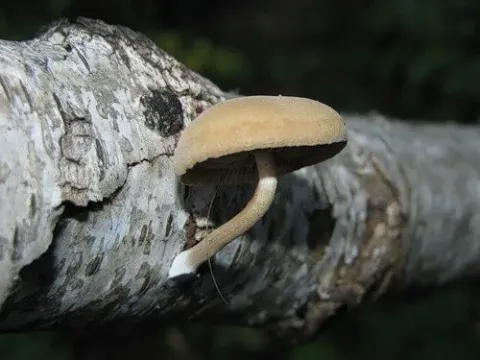
Simocybe
Simocybe
The genus Simocybe belongs to the family Inocybaceae, order Agaricales. These are primarily saprotrophic fungi that develop on decaying wood or plant debris in various forest and garden ecosystems.
What the section contains
Simocybe
The pathogen consists of small, agaricoid mushrooms characterized by their brownish or yellowish-tan colors. The mycelium penetrates dead or weakened wood structure, secreting specific enzymes to break down complex organic matter.
Biologically, this genus is not an obligate parasite, though its presence often correlates with the degradation processes in forest stands. The fungus spreads via spores dispersed by air currents during the active fruiting period.
In agronomy and forestry, these fungi rarely act as aggressive primary pathogens attacking healthy plant tissues. However, they serve as bio-indicators of environmental conditions and micro-climatic humidity within a stand.
Scientific study of this genus is vital for mycology and forest pathology, as Simocybe contributes to nutrient cycling by decomposing lignin and cellulose in woodland environments.
External signs of mycelial colonization are often inconspicuous until fruiting bodies appear on the substrate surface. These mushrooms typically feature small, convex, or flattened caps ranging from 0.5 to 3 centimeters in diameter.
Cap surfaces may appear velvety or finely squamulose, providing a diagnostic feature for the genus. The stem is usually short and often eccentrically attached to the cap.
The gills on the underside of the cap exhibit distinct shades, ranging from ochraceous to brown. Careful inspection of the substrate may reveal thin strands of mycelium extending into the wood fibers.
Infection leads to changes in the substrate's color and texture, making it softer and more brittle due to the fungus's enzymatic activity. In humid weather, spore deposits may accumulate around the fruiting bodies.
The presence of these fungi in orchards or windbreaks suggests significant accumulation of organic waste and high humidity levels in the soil or decaying wood.
Stable high humidity in the air and substrate is essential for the active development of fruiting bodies and spore dispersal. Prolonged rainy periods or heavy dew in wooded areas create optimal conditions.
The temperature optimum for mycelial growth is generally found within the moderate range, typical of spring or autumn seasons. Extreme heat and desiccation of the substrate significantly inhibit fungal development.
The fungus prefers shaded areas with minimal direct sunlight, which explains its frequent occurrence in dense shrubbery or on the shaded sides of old trees.
An adequate supply of decaying organic matter is the primary factor for colonization. Simocybe cannot thrive on sterile or healthy living surfaces, requiring the substrate to be pre-weakened by other factors.
Human-induced factors, such as improper tree pruning or excessive mulching near tree trunks, may create favorable micro-environments for spore accumulation in gardens.
The primary concern regarding the presence of this fungus is the accelerated decomposition of woody debris, which can occasionally lead to premature structural decay of supporting plant components.
While Simocybe rarely attacks healthy trees, they may colonize pruning wounds or mechanical bark damage if these sites are not promptly treated with antiseptic agents.
Their activity in orchards may indirectly reduce the aesthetic value of the plants and potentially increase the risk of secondary infections by more aggressive fungal pathogens.
In industrial tree nurseries, excessive development of saprotrophic fungi is undesirable, as it necessitates stricter maintenance of site hygiene and timely removal of fallen logs or debris.
The risk to primary agricultural crops is minimal, though in high-humidity conditions, the fungus may develop on organic fertilizers or plant residues lying in close proximity to the root zone.
Maintaining sanitary conditions is the fundamental method of prevention. Timely removal of decaying wood and fallen leaves eliminates the fungus's primary food source.
To prevent colonization of fruit trees, high-quality pruning should be practiced, followed by the disinfection of wounds using orchard paint or fungicidal pastes.
Ensuring proper ventilation in orchards and managing soil humidity levels helps create an unfavorable environment for spore germination.
- Regular thinning of tree crowns to improve airflow.
- Judicious use of fungicides only in cases of massive infestation.
- Prompt disposal of diseased branches and stumps.
If colonies are detected on cultural plants, mechanical removal of the fruiting bodies is recommended, followed by the application of copper-based disinfectants to the affected areas.