
Similiphoma crystallifera
Similiphoma crystallifera
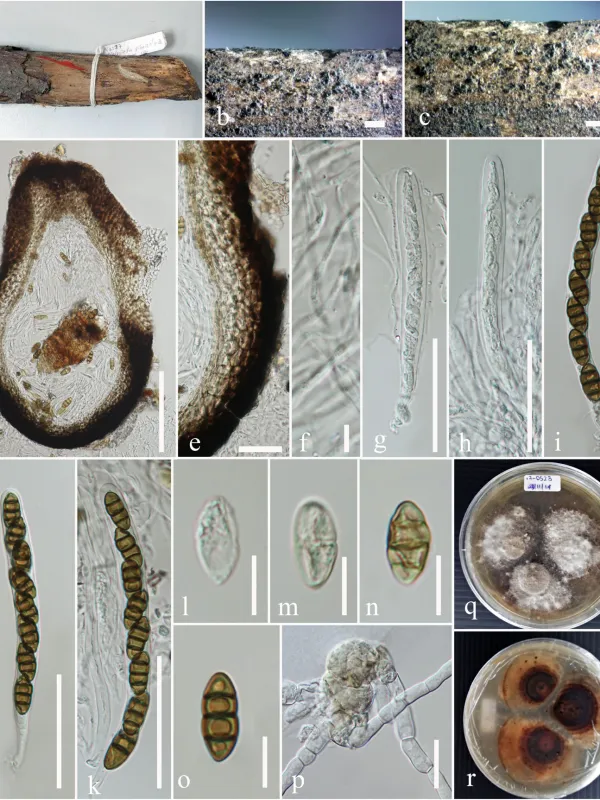
Description
Symptoms
Initial symptoms typically appear as localized chlorotic spots on leaves and stems, which gradually expand into necrotic lesions as the tissue dies.
Infected areas often darken to brown or greyish hues and may develop a distinct margin as the fungus colonizes the surrounding plant cells.
The presence of tiny, black, flask-shaped pycnidia on the surface of the lesions is a common sign of advanced colonization by the pathogen.
Microscopic examination of these areas reveals crystalline inclusions within the mycelium, a defining feature that gives the species its specific epithet.
Severely affected plants exhibit stunted growth, wilting of the foliage, and in extreme cases, total collapse of the stems due to structural weakness.
Pathogen
The causative agent of this disease is the fungus Similiphoma crystallifera, a microscopic organism that thrives by invading the tissues of host plants.
It is classified as a facultative parasite, meaning it can survive on decaying organic matter but preferentially infects living plant tissues under favorable conditions.
The fungus is distinguished by its unique ability to form crystal-like deposits within infected tissues, which serves as a vital diagnostic marker in mycological analysis.
The life cycle involves the production of spores (conidia) in pycnidia, structures that facilitate the dissemination of the pathogen through rain splashes and wind.
As part of the Pleosporales order, this fungus possesses evolutionary adaptations that allow it to persist in various agricultural environments with significant durability.
Conditions for development
The development of Similiphoma crystallifera is heavily dependent on high moisture levels, particularly following periods of prolonged rainfall or heavy fog.
Cool to moderate temperatures provide the most conducive environment for the fungus to transition from dormancy to active vegetative growth.
Poor field management, such as the retention of diseased crop residues on the soil surface, significantly increases the risk of early-season infection.
Dense planting patterns reduce air circulation within the crop canopy, leading to a localized humid environment that favors rapid fungal proliferation.
The combination of high humidity and moderate heat is the primary driver for the seasonal outbreaks of the disease across agricultural fields.
Why it matters
The disease causes significant harm by destroying photosynthetic leaf tissue, which directly restricts the plant's ability to produce necessary sugars for growth.
This disruption of metabolic processes leads to a substantial decrease in yield, as the plant cannot effectively allocate resources to grains or fruits.
Secondary infections often follow as the plant's defensive barrier is weakened by the fungal attack, making it susceptible to opportunistic bacteria and fungi.
Economic losses are compounded by a reduction in crop quality, often rendering the harvest unsuitable for commercial sale or long-term storage.
The spread of the pathogen to neighboring fields can lead to large-scale epidemics if proper sanitation and intervention measures are not promptly initiated.
Protection
Successful management begins with crop rotation, which effectively breaks the disease cycle by depriving the fungus of its required host species.
Deep plowing in the autumn is recommended to bury infected plant residues, exposing them to soil microflora that accelerate their decomposition.
Using certified, pathogen-free seeds is crucial for preventing the introduction of the fungus into previously healthy agricultural plots.
Fungicide applications, specifically those targeting ascomycetes, are essential during high-risk periods to suppress the development of the pathogen.
- Regular monitoring of fields for early detection.
- Proper thinning to improve ventilation in dense crops.
- Effective weed management to eliminate alternative hosts.
Discussion
No discussions yet — be the first.