
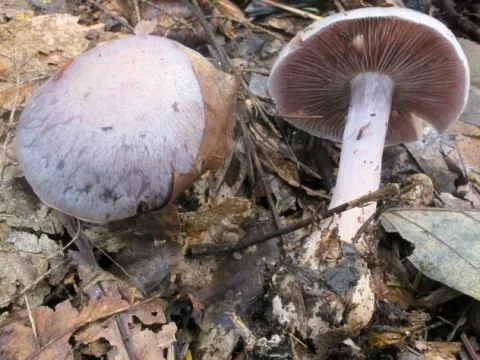
Silver-gray webcap
Cortinarius subargentatus
The silver-gray webcap (Cortinarius subargentatus) is a species of fungus belonging to the Cortinariaceae family. It is a well-known mycorrhizal fungus that plays a significant role in forest ecosystems.
What the section contains
Silver-gray webcap
It is not a plant pathogen; it does not harm agricultural crops. Instead, it forms beneficial symbiotic associations with the root systems of various tree species, aiding in nutrient uptake.
The structure of the mushroom is characterized by a cobweb-like veil, known as a cortina, which covers the gills when the fungus is in its immature stage.
The life cycle involves the formation of fruiting bodies that disperse spores into the environment, which is the primary method of reproduction for this organism.
Ecologically, it is highly valued as a component of healthy forests, contributing to the decomposition of forest litter and cycling of essential nutrients.
The cap is distinctively silver-gray or brownish-gray, often exhibiting a slight metallic or silky sheen, which helps in identifying the species in the wild.
The gills are initially light in color but transition to a rusty brown as the spores mature, which is a signature trait of the Cortinarius genus.
The stem is typically firm and can have a bulbous base, which is a common diagnostic feature for many species within this group.
The flesh is dense and generally lacks a strong or pungent odor, making it less distinct in terms of olfactory identification.
Microscopically, the spores are almond-shaped and covered in fine warts, which is the standard identification method for mycologists distinguishing this species.
This species thrives in moist, cool forest environments, particularly those with deep leaf litter layers that retain moisture throughout the season.
It is predominantly associated with coniferous and mixed forests, forming stable mycorrhizal networks with specific tree hosts in those areas.
The optimal period for observing the fruiting bodies is from late summer through autumn when atmospheric humidity is at its peak.
Soil conditions are essential, as the species prefers slightly acidic environments common in stable, undisturbed woodland soil profiles.
Environmental stability is key; fluctuations in temperature and moisture levels can significantly reduce the formation of visible mushrooms during the season.