
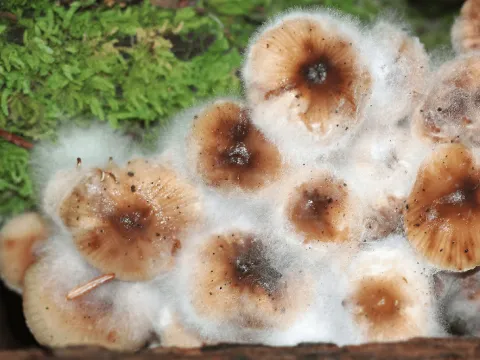
Psilocybe
Psilocybe
The genus Psilocybe belongs to the Strophariaceae family and is classified as a group of saprotrophic fungi rather than plant pathogens.
What the section contains
Psilocybe
In an agricultural context, these organisms function as decomposers, breaking down organic debris, leaf litter, and various crop residues in the soil.
The vegetative body, or mycelium, secretes enzymes to digest complex organic compounds, returning essential nutrients into the soil cycle.
Unlike parasitic fungi, Psilocybe does not rely on living plant tissues for its survival or reproduction.
Taxonomically, the genus is well-defined by its specific morphological features, including its spore-bearing lamellae located beneath the cap.
The primary indicators of Psilocybe presence are the development of small fruiting bodies in areas rich in organic matter or decomposing mulch.
The mycelium often manifests as a delicate, white, web-like network embedded within moist soil or organic fertilizers.
Fruiting typically occurs following periods of high moisture, such as heavy rain, which creates the necessary environmental trigger.
Because they are not pathogenic to crops, there are no visible disease symptoms such as leaf spots, wilting, or necrosis associated with their presence.
Presence of these fungi is often a biological indicator of healthy, nutrient-dense soil with high levels of decomposing organic material.
Psilocybe development is strictly dependent on moisture availability and the presence of cellulose-rich substrates.
Optimal growth temperatures for the mycelium generally range between 15 and 25 degrees Celsius, matching many common environmental conditions.
Spore dissemination is carried out primarily by wind, allowing for broad colonization of suitable habitats across agricultural landscapes.
Soils with slightly acidic pH levels and substantial humus content provide the most favorable environment for their growth.
Agricultural practices that involve high levels of surface residue or frequent irrigation create ideal niches for saprotrophic fungal communities.
Psilocybe fungi are considered harmless to agricultural crops, as they do not possess the mechanisms to infect or consume living vascular plants.
They do not cause yield losses, nor do they impact the quality of the harvested produce in any negative capacity.
In most farming scenarios, they are viewed as a natural component of the soil microflora that facilitates the nutrient cycle.
Excessive proliferation may simply reflect soil management practices that favor high organic moisture content, rather than representing a disease threat.
Consequently, they do not require monitoring or economic loss assessment in any integrated pest management programs.
No chemical or biological control measures are necessary for Psilocybe, as they pose no risk to commercial agricultural production.
If their presence is undesirable in specific areas, improving soil aeration and drainage will naturally inhibit their development.
Standard tillage practices, such as deep incorporation of harvest residues, effectively reduce the surface availability of substrate for these fungi.
Management of irrigation cycles to avoid waterlogged conditions is sufficient to regulate the activity of saprotrophic mycobiota.
The use of fungicides to manage these organisms is discouraged due to potential negative impacts on beneficial soil biology.