
Psoroma hypnorum
Psoroma hypnorum
Description
Symptoms
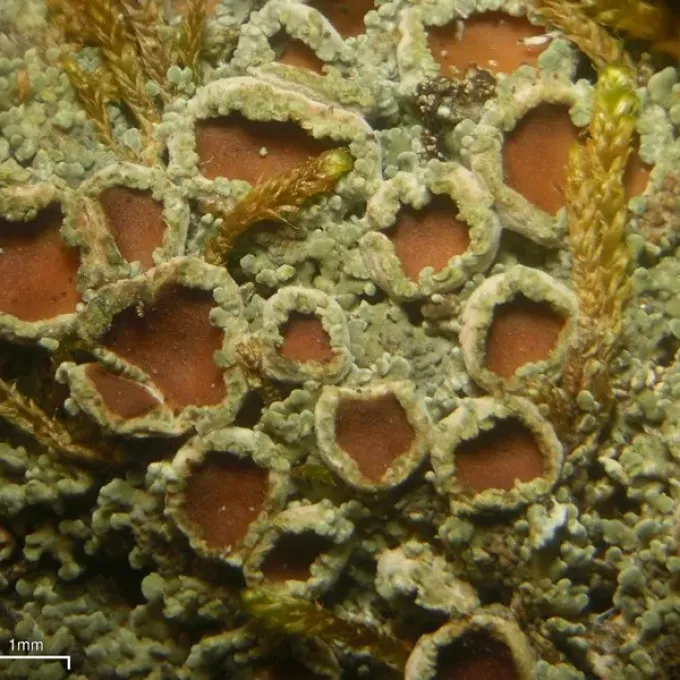
Psoroma hypnorum is a crustose-squamulose lichen, characterized by its distinct brown, olive, or reddish-brown squamules that form small, dense patches on the substrate.
The most recognizable feature of this species is its abundant apothecia, which are the reproductive structures. They are usually dark brown or reddish and possess a thick, distinct margin.
The thallus is composed of tiny, closely appressed scales that grow over mosses or organic soil, giving the ground a textured, crusty appearance in moist habitats.
It is commonly found associated with moss colonies, which serve as its primary substrate in boreal or montane forest environments across the Northern Hemisphere.
Identification of this lichen requires careful observation of the apothecial margin and the squamule density, which are critical for distinguishing it from other closely related species.
Pathogen
It is important to clarify that Psoroma hypnorum is not a plant disease or an agricultural pathogen. It is a symbiotic lichenized fungus that plays an ecological role in natural habitats.
The organism consists of a fungal partner and a cyanobacterial photobiont (typically Nostoc), which allows it to thrive in nutrient-poor environments by fixing nitrogen from the air.
As a non-parasitic organism, it does not penetrate the living tissues of plants or crops. It utilizes mosses and decaying bark as a substrate for physical support rather than for obtaining nutrients.
Psoroma hypnorum does not produce any phytotoxic compounds or enzymes that could harm vascular plants, ensuring it poses no risk to agricultural crops or gardens.
In forest ecosystems, its presence is a sign of a healthy, stable environment, and it is considered a non-invasive, passive component of the local vegetation.
Conditions for development
Psoroma hypnorum thrives in environments characterized by high humidity and cool temperatures. It is frequently associated with old-growth forests and alpine meadows.
The species is highly sensitive to air pollution, particularly sulfur dioxide levels, making it a reliable bioindicator for monitoring air quality in remote forest regions.
The ideal habitat includes well-drained but moist mossy surfaces on tree bases, fallen logs, or stable, acidic forest soils rich in organic content.
Environmental conditions that support steady, high moisture levels throughout the growing season are essential for the survival and reproduction of this lichen.
The lichen is capable of surviving temporary dry spells by entering a dormant metabolic state, resuming its life functions as soon as moisture availability returns.
Discussion
No discussions yet — be the first.