
Psilocybe subaeruginosa
Psilocybe subaeruginosa
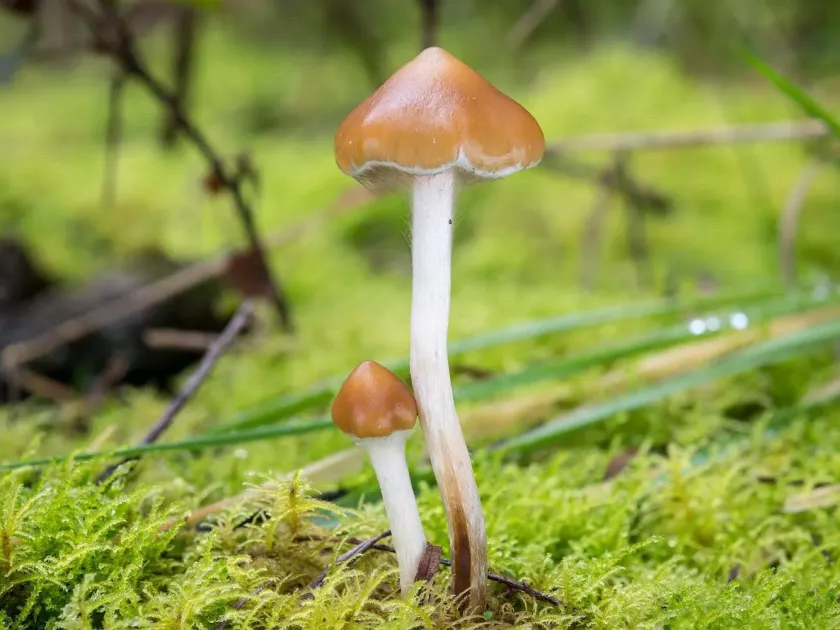
Description
Pathogen
It is crucial to clarify that Psilocybe subaeruginosa is not a plant pathogen and does not cause diseases in any agricultural or horticultural crops.
This species is classified as a saprotrophic fungus, which survives by decomposing dead organic matter such as leaf litter and decaying wood.
In agronomy, it is categorized as a beneficial or neutral organism that contributes to soil health through nutrient cycling and mineralization processes.
It lacks the enzymatic or physiological mechanisms required to colonize or damage living plant tissue, making it harmless to crops.
Mycological research confirms that this species has no parasitic relationship with vascular plants, thus posing no risk to agricultural productivity.
Conditions for development
Psilocybe subaeruginosa requires specific ecological conditions to thrive, primarily high moisture levels and access to decaying organic substrates.
Its mycelial growth is typically confined to shaded environments with high humidity, such as forest floors or rotting woody debris.
The fungus is highly sensitive to environmental stressors like direct sunlight and desiccation, which are common in well-maintained agricultural fields.
Spread is facilitated by spores in moist, temperate conditions, but these spores cannot initiate an infection in healthy or stressed crops.
The field environment, characterized by periodic tillage and varying light exposure, is generally unsuitable for the colonization of this fungus.
Why it matters
There is no economic or physiological harm associated with Psilocybe subaeruginosa regarding the cultivation of commercial crops.
The fungus does not compete for nutrients, water, or space with crop plants, as its ecological niche is strictly defined by decomposing organic debris.
It does not produce metabolites that are toxic to crops; therefore, it does not act as a biotic stress factor in agricultural systems.
Since it is not a pathogen, it does not qualify for quarantine measures or any specific phytosanitary control protocols worldwide.
The presence of this fungus is simply an indicator of organic matter turnover and soil biological activity, which is generally beneficial for soil structure.
Protection
No control measures are necessary for Psilocybe subaeruginosa because it does not represent a threat to plant health or farm yields.
Agricultural intervention with fungicides to target this organism would be considered an unnecessary waste of resources and an ecological disturbance.
General farm hygiene and proper organic residue management are sufficient to maintain field health and prevent unnecessary accumulation of decaying matter.
Agronomists should prioritize monitoring for genuine pathogens that can impact economic yields, rather than focusing on non-harmful saprotrophs.
Promoting a balanced soil microbial community through sustainable practices naturally manages the distribution of saprotrophic fungi within the ecosystem.
Discussion
No discussions yet — be the first.