
Psilolechia
Psilolechia
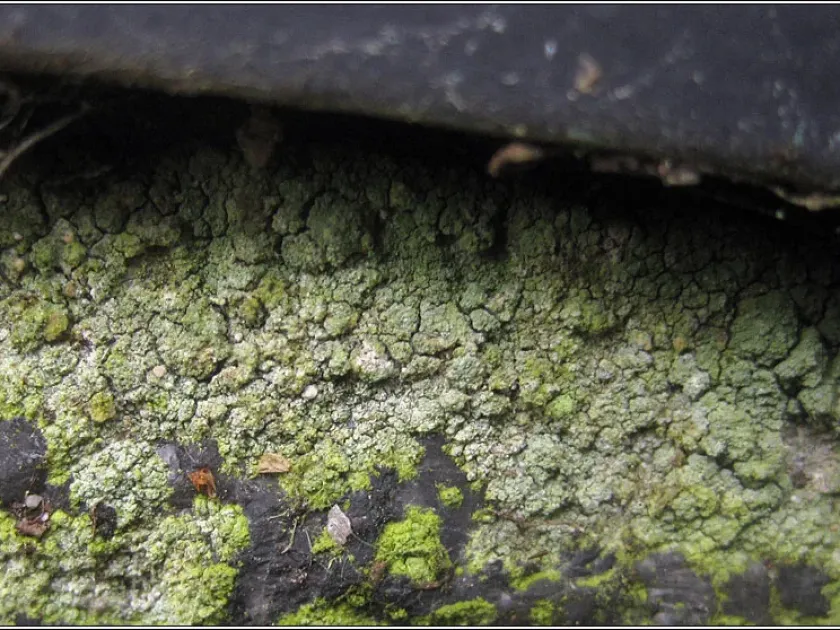
Description
Symptoms
The primary symptom is the appearance of vibrant yellowish-green or lemon-colored granular patches on the bark of fruit and ornamental trees.
The texture is often described as sorediate or powdery, forming a continuous or fragmented crust that adheres firmly to the bark’s surface.
Unlike true bark rot or canker diseases, these colonies remain strictly superficial and do not penetrate into the cambium layer or deep into the wood.
Colonies often thrive on the shaded side of tree trunks, where moisture remains trapped and prevents the bark from drying out between rainfall events.
As the colony matures, it may cover larger surface areas, significantly altering the aesthetic appearance and biological status of the tree trunk.
Pathogen
The genus Psilolechia consists of crustose lichens, which are symbiotic organisms composed of fungi and algae, often mistaken for parasitic fungal diseases in horticultural settings.
These organisms are not obligate pathogens; they do not extract nutrients directly from the living plant tissue, but rather inhabit the surface of the bark.
Species such as Psilolechia lucida create distinctive, often brightly colored, powder-like crusts on the outer surfaces of woody stems and branches.
Mycologically, these organisms depend on atmospheric moisture, dust, and minerals accumulated on the bark surface to sustain their biological cycles.
Their presence is typically a biological indicator of high environmental humidity and the presence of aged or textured bark suitable for colonization.
Conditions for development
High relative humidity is the fundamental driver for the establishment and proliferation of Psilolechia, especially in orchards with poor air circulation.
Trees with rough, aged bark or those with crevices and fissures offer an ideal substrate for the spores to land and begin their development.
Densely planted orchards or areas with heavy foliage canopy create the microclimatic conditions necessary for consistent moisture retention on the bark.
Environmental factors, including low-lying orchard locations or proximity to water bodies, frequently correlate with a higher incidence of lichen growth.
Stress factors that weaken a tree's growth rate may lead to the shedding of less bark, providing a stable foundation for the lichen to spread over several years.
Why it matters
The main indirect harm occurs through the mechanical obstruction of gas exchange in the bark’s lenticels, which are essential for the tree's respiration.
Thick lichen crusts provide shelter for various pests, including scale insects, mites, and their eggs, which utilize these areas for protection from predators.
Moisture-retaining crusts create a micro-environment that promotes the growth of secondary bacterial or fungal pathogens that can degrade bark health.
Heavily covered trees may show signs of overall reduced vigor, as the presence of extensive epiphytic growth suggests a suboptimal growing environment.
While the lichen itself is not aggressively killing the tree, the associated reduction in health increases susceptibility to other, more lethal diseases.
Protection
Management begins with mechanical control, involving the careful removal of loose or dead bark using specialized scrapers or stiff-bristled brushes.
Applying a protective lime wash, often enriched with copper sulfate, to the trunks acts as both a sanitizer and a deterrent to future colonization.
Pruning is essential to improve sunlight penetration and air movement, which naturally reduces the surface humidity required for lichen survival.
Copper-based fungicide applications used for other fruit tree diseases also effectively limit the development of Psilolechia on the bark surface.
- Mechanical bark cleaning
- Improving air circulation
- Copper-based spray treatments
- Sanitary thinning of the canopy
Discussion
No discussions yet — be the first.