
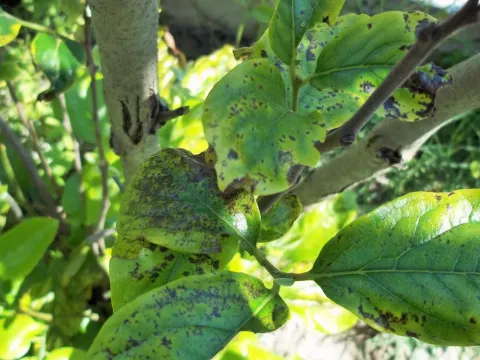
Persimmon cercospora leaf spot
Pseudocercospora kaki
The disease is caused by the fungus Pseudocercospora kaki, a specialized pathogen that affects plants within the genus Diospyros.
What the section contains
Persimmon cercospora leaf spot
It is an imperfect fungus that spreads primarily through conidia, which are dispersed by rain splashes, wind, and movement within the orchard canopy.
The fungus survives the winter season in the form of dormant mycelium within fallen leaves left on the orchard floor or in the vicinity of the trees.
Primary infection occurs in spring when spores are carried to the newly developing leaves, where they initiate the first symptoms of the disease.
The pathogen's life cycle involves penetrating the host tissue through stomata, leading to the localized death of leaf cells.
The symptoms appear as small, initially yellow or light green spots on the leaves, which eventually turn dark brown or black.
These spots are often angular or circular in shape and are frequently surrounded by a darker margin that contrasts with the leaf tissue.
On the underside of the leaves, a thin gray-olive fuzzy layer of fungal growth (conidiophores and conidia) can often be seen under magnification.
As the infection progresses, multiple spots may coalesce, causing significant portions of the leaf to wither and turn necrotic.
Severe infestations result in premature leaf drop, which can leave the tree partially or entirely defoliated before the natural dormancy period begins.
Persimmon cercospora leaf spot is highly favored by warm and humid conditions, which are typical during late spring and summer months.
Frequent rainfall or overhead irrigation increases the humidity levels in the canopy, facilitating the germination and spread of fungal spores.
Poor orchard sanitation, such as leaving decaying leaves under the trees, creates a continuous reservoir of infection for successive growing seasons.
Densely planted orchards with limited air circulation are significantly more prone to rapid disease development due to reduced evaporation.
Temperatures between 20°C and 25°C are considered optimal for the rapid colonization of leaf tissues by the Pseudocercospora kaki fungus.
The primary impact of the disease is the reduction of the photosynthetic leaf area, which is vital for the tree's health and fruit development.
Premature defoliation compromises the tree's ability to store sufficient carbohydrates for the following year's growth and fruit production.
Fruits on infected trees may be smaller in size and lower in sugar content, directly impacting the marketable yield for orchardists.
Weakened trees become more susceptible to winter frost damage and secondary attacks by pests or other pathogens during the following season.
Chronic annual infection can lead to a steady decline in the tree's overall vitality, eventually rendering it unproductive.
Strict sanitation is the most effective cultural control measure; all fallen leaves must be collected and removed or buried to eliminate the overwintering inoculum.
Proper pruning practices that open up the tree canopy are essential to improve air movement and reduce the humidity levels that the fungus requires.
Preventive application of copper-based fungicides is highly recommended during the early stages of bud break and throughout the growing season.
Systemic fungicides may be employed if symptoms appear to be spreading rapidly, ensuring full coverage of both leaf surfaces.
- Regular monitoring of the orchard canopy
- Balanced fertilization to maintain plant vigor
- Avoiding overhead irrigation methods
- Timely removal of diseased plant debris