
Pertusaria
Pertusariales
The order Pertusariales comprises a group of specialized lichenized fungi that frequently colonize the bark of various woody plants.
What the section contains
Pertusaria
These organisms are symbiotic entities where the fungal component, protected by a thallus, interacts with the surface layers of the tree bark.
Belonging to the class Lecanoromycetes, they are recognized by their distinct, often embedded fruiting bodies known as perithecia.
While they function primarily as epiphytes, their biological presence can signal environmental conditions and the specific physiological status of the host tree.
They are not true parasites, yet their development is closely tied to the texture and moisture content of the substrate they inhabit.
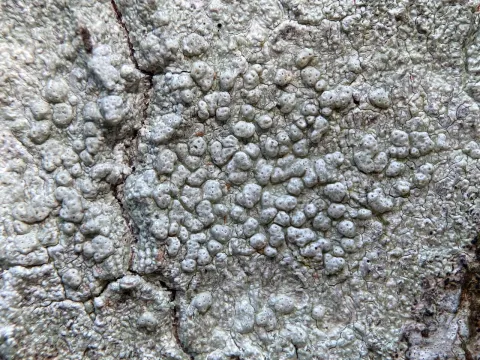
The primary symptom is the presence of dense, crust-like growths on the stems and larger branches of trees, often appearing as patches.
The color of these lichenized patches varies from grayish-white to a dull yellow-green, contrasting with the natural color of the bark.
Close inspection reveals small, pinpoint-like spots on the surface, which correspond to the fungal fruiting bodies developing within the thallus.
As the colony expands, it creates a persistent, leather-like layer that remains fixed to the bark even in dry weather conditions.
Increased humidity or rainfall often makes the thallus appear more vibrant, which is a key identifying feature during field scouting.
High relative humidity and frequent fog are the main drivers for the colonization and expansion of Pertusariales on tree surfaces.
Poor ventilation within the orchard canopy due to dense foliage or lack of pruning significantly encourages their development.
Older trees with rough, fissured bark provide more surface area and shelter for the spores to germinate and establish long-term colonies.
Shaded areas within the garden, which are less exposed to direct sunlight, become hotspots for these epiphytic organisms.
A decline in the tree's vigor often allows lichens to spread more rapidly, as the bark surface becomes a more stable substrate over time.
Though not pathogenic in the traditional sense, extensive growth can physically obstruct gas exchange in the tree bark.
The persistent layer of lichen acts as a shelter for various wood-boring insects and serves as a nursery for other pathogenic fungi.
The physical presence of the thallus may cause minor damage to the outer bark layer, potentially leading to micro-cracks over several seasons.
In ornamental and nursery settings, the presence of these crustose fungi is often viewed as a blemish that decreases market value.
If left unmanaged, the cumulative stress from heavy colonization may contribute to the premature aging of the bark tissues.
Mechanical removal of lichens using soft wire brushes is recommended during the dormant season to clear the bark surface safely.
Applying iron sulfate solutions during the tree's dormant phase is highly effective at reducing the presence of crustose fungi.
Regular whitewashing of the trunk with a mix of lime and copper-based fungicides provides a barrier against new colonization.
Improving orchard hygiene, including systematic pruning, ensures better sunlight penetration and air movement, which inhibits lichen growth.
- Manual bark cleaning during winter.
- Copper-based spray applications.
- Maintaining optimal tree vigor.
- Proper pruning for ventilation.
- Annual stem whitewashing.