
Persimmon Mycosphaerella leaf spot
Mycosphaerella horii
Description
Symptoms
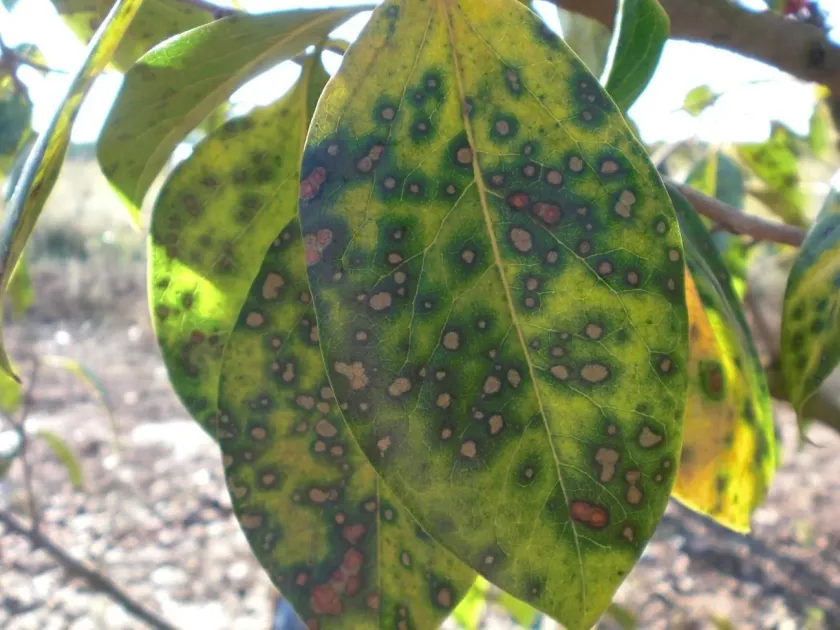
The first visible signs of the disease appear on leaves as small chlorotic spots, which gradually turn brown or dark-tan in color.
Over time, the spots increase in size and can merge, affecting a significant portion of the leaf blade. A dark coating, consisting of the fungus's reproductive organs, is often visible on the affected areas.
Infected leaves turn yellow prematurely and drop. In severe cases, the tree may lose a large portion of its canopy even before autumn begins.
Symptoms on young shoots are less common, although small ulcerative lesions on the bark may occur under conditions of high infection pressure.
- Premature yellowing of leaves in mid-summer.
- Development of dark spots with distinct margins.
- Premature defoliation.
- Reduced overall tree productivity.
Pathogen
The causal agent of this disease is the fungus Mycosphaerella horii, which belongs to the class Ascomycetes. This is a highly specialized pathogen that affects primarily plants of the genus Diospyros.
The fungus's life cycle includes the formation of ascospores in fruiting bodies (perithecia) that develop on fallen, infected leaves after overwintering. In spring, spores are dispersed by wind and rain, causing primary infection.
In addition to the sexual stage, the fungus can form conidial spores. This allows the pathogen to spread actively throughout the growing season whenever favorable weather conditions occur.
The fungal mycelium penetrates leaf tissue through stomata or mechanical wounds. Growing within the parenchyma, it destroys plant cells, resulting in characteristic necrotic spots.
The pathogen can remain viable in plant debris for several years, making it highly resistant to harsh environmental factors.
Conditions for development
The primary factor promoting infection development is high air humidity and frequent rainfall during the summer months. The optimal temperature for spore germination is 20-25 degrees Celsius.
Densely planted persimmon orchards significantly increase the risk of an outbreak, as the internal canopy creates a microclimate with poor air circulation, where moisture remains on leaves for longer periods.
Low light intensity in the areas where persimmons are grown also favors the development of Mycosphaerella leaf spot. The fungus colonizes plant tissues faster in shaded environments.
Weakened plants with impaired mineral metabolism or those under stress (drought, waterlogging) become more vulnerable to fungal infection.
Poor orchard hygiene, particularly leaving fallen leaves under trees, creates a massive reservoir of inoculum for the next season.
Why it matters
Mycosphaerella leaf spot causes serious damage to fruit production by inducing premature leaf drop, which leads to the depletion of nutrient reserves in the wood.
As a result of the infection, photosynthesis is disrupted. This leads to smaller fruit size, lower quality, and the loss of commercial appeal.
Trees that suffer from this fungal disease annually become less winter-hardy and are more likely to experience frost damage during cold winter temperatures.
Chronic infection leads to general growth suppression, reduced plant immunity, and a shortened productive lifespan.
If the disease spreads widely without proper control, total seasonal crop loss and potential mortality of young saplings may occur.
Protection
The key preventive method is the thorough removal and destruction of fallen leaves in autumn, as this is where the primary reservoir of fungal spores hibernates.
Regular sanitary pruning of the canopy is recommended to improve aeration and light penetration, which reduces humidity in the root zone and canopy.
The use of copper-based fungicides (Bordeaux mixture and similar products) in early spring and after flowering helps effectively suppress primary infection by the pathogen.
During the growing season, if initial symptoms appear, systemic fungicides with broad-spectrum activity should be used according to the label instructions.
Maintaining proper irrigation and applying balanced fertilizers helps strengthen the persimmon tree's natural defenses, making it less susceptible to fungal attacks.
Discussion
No discussions yet — be the first.