
Pertusaria
Pertusaria
Pertusaria is a genus of lichenized fungi that typically colonize the bark of perennial trees and shrubs in orchards and forests.
What the section contains
Pertusaria
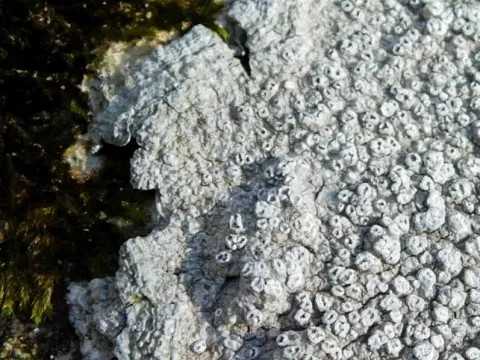
The growth appears as dense, crust-like patches that vary in color from light gray to white or yellowish, adhering firmly to the bark surface.
A key diagnostic feature of this genus is the presence of perithecia, which appear as small, pore-like depressions or tiny bumps on the lichen thallus.
As the lichen colony matures, it can spread extensively, forming a continuous thick crust that physically covers large areas of the tree trunk.
The texture of the thallus is often granular or cracked, depending on the specific environmental conditions and the age of the colony.
The biological agent is a lichen, which is a symbiotic association between a fungus and algae, using the tree bark strictly as a substrate.
It is not a parasitic disease that feeds on the tree's sap or living tissues; rather, it is an epiphyte that lives on the outer dead bark layers.
The fungal component attaches to the corky layer of the bark, avoiding the vital cambium and vascular tissues of the host plant.
Reproduction is facilitated by fungal spores, which are easily disseminated by wind or rain splash onto available bark surfaces.
The growth rate of Pertusaria is very slow, which is why significant colonization is typically observed on older, neglected trees.
High relative humidity is the primary driver for the establishment and proliferation of Pertusaria on tree bark.
Orchards with dense canopies that restrict airflow and slow down the drying process of the trunk after rainfall provide ideal conditions.
Shaded areas of the tree, particularly on the north side of the trunk, are frequently the most heavily colonized by lichen.
Trees that are poorly maintained, lacking pruning and proper sanitation, are more susceptible to becoming covered in lichen over time.
A combination of low light levels and moist conditions creates a stable environment where the lichen can thrive without interruption.
The main physical harm is the obstruction of lenticels, which are essential pores for the bark's respiration, leading to localized hypoxia.
The lichen thallus creates a moist microhabitat under its surface that serves as a perfect overwintering site for pests like scale insects and mites.
Persistent moisture trapped beneath the lichen can promote the development of secondary fungal and bacterial pathogens that damage the bark.
While the tree itself is rarely killed by lichen, the overall physiological stress may lead to reduced growth and decreased productivity.
The accumulation of thick layers of lichen can reduce the overall health and vigor of the tree by interfering with normal physiological processes.
Proper canopy management through annual pruning is the most effective way to improve airflow and light penetration, discouraging lichen growth.
Mechanical removal using soft wire brushes or scrapers during the dormant season is a direct way to clean the trunk and main branches.
Applying a lime wash to the trunk after mechanical cleaning helps disinfect the bark and creates an alkaline surface that inhibits lichen recolonization.
Spraying trees with a 3–5% ferrous sulfate (iron sulfate) solution effectively kills lichens, causing them to dry out and eventually detach from the bark.
Maintaining optimal tree health through balanced fertilization and correct watering practices makes the tree more resilient to epiphyte colonization.