
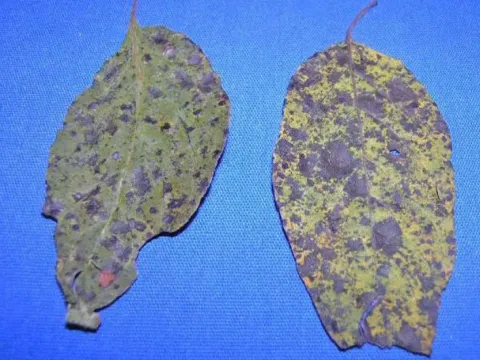
Persimmon pseudocercospora leaf spot
Pseudocercospora sawadae
The disease is caused by the fungus Pseudocercospora sawadae, which primarily infects persimmon species like Diospyros kaki. It is a specialized pathogen that thrives by attacking the foliage of these trees.
What the section contains
Persimmon pseudocercospora leaf spot
The life cycle of the pathogen is centered on the survival of spores in fallen leaf litter during winter. Once spring arrives and temperatures rise, the fungus produces new conidia that spread to young leaves.
The infection begins when fungal spores land on the leaf surface and penetrate through stomata or wounds. Inside the leaf, the mycelium develops and begins to extract nutrients, causing visible localized necrosis.
This fungus is known for its ability to produce multiple generations of spores within a single growing season. This ensures that the pathogen can rapidly spread across the entire canopy if environmental conditions remain favorable.
Understanding the biology of Pseudocercospora sawadae is crucial for orchardists. It is categorized as a leaf-spotting pathogen that significantly interferes with the overall vigor of the host plant.
The initial signs of pseudocercospora leaf spot are small, inconspicuous spots on the underside or surface of the leaves. These spots gradually grow larger, changing from pale green to brown or dark reddish-brown.
A distinctive feature of the disease is the presence of a velvety, greyish-black or olive-brown fungal growth in the center of the spots. This represents the spore-bearing structures of the fungus.
As the disease progresses, the lesions may coalesce, leading to extensive tissue death across the leaf blade. This often causes the leaves to curl and drop prematurely, which is a classic symptom of severe infection.
While the disease mainly impacts foliage, in rare and extreme cases, it can affect young succulent shoots. Visual inspection of the lower canopy is recommended, as the fungus typically starts infecting leaves closer to the ground.
Trees showing these signs often appear thin and sparse by mid-to-late summer. The contrast between healthy leaves and those covered in spots becomes highly visible, indicating a significant fungal burden.
Warm and humid conditions are the primary drivers for Pseudocercospora sawadae development. High moisture levels, such as those provided by frequent summer rains or morning dew, are essential for spore germination.
Poor air circulation within the tree crown creates a microclimate with high humidity that favors the fungus. Densely planted orchards without adequate pruning are significantly more prone to rapid infection.
The spread of the fungus is largely facilitated by rain splashing spores from lower infected leaves to higher healthy ones. Wind gusts also play a role in dispersing spores throughout the orchard.
Temperature plays a vital role, with moderate summer heat providing the perfect environment for the rapid expansion of fungal colonies. Excessive shading can also prevent leaves from drying, keeping them vulnerable for longer periods.
Orchards located in areas with high annual rainfall are at a higher risk of persistent infection. Effective canopy management is the best defense against creating these conducive environmental pockets.
The primary harm caused by this disease is the reduction in total photosynthetic area. Loss of leaves limits the tree's ability to produce energy, which directly reduces the quality and sugar content of the persimmon fruit.
Early leaf drop forces the tree to utilize stored energy reserves prematurely, weakening its overall health. This makes the persimmon tree significantly more susceptible to winter frost damage.
Yearly recurring infections lead to stunted growth and reduced yields, impacting the commercial viability of the orchard. Neglected trees may slowly decline over several years if not managed correctly.
The aesthetic value of the trees is also severely compromised by the infection. Persistent leaf spotting and premature defoliation can lead to a general loss of tree vigor and overall structural health.
There is also an economic impact due to the need for continuous fungicide applications and labor-intensive sanitation practices. Unmanaged infections can result in poor harvest outputs, making the orchard unprofitable.
The most effective strategy starts with strict orchard sanitation. Collecting and destroying fallen leaves during autumn is essential to eliminate the primary overwintering source of the fungus.
Proper pruning is vital to ensure maximum light penetration and air movement within the crown. A well-ventilated canopy prevents the buildup of humidity, making it harder for the fungus to establish itself.
Copper-based fungicides are standard for prophylactic control. These should be applied before the onset of the wet season and the first signs of infection to protect the healthy foliage.
If the infection has already started, systemic fungicides can be used to suppress further development. It is highly recommended to rotate chemicals to prevent the fungus from developing resistance to any specific active ingredient.
- Regular pruning to improve air circulation.
- Sanitary disposal of all infected leaf litter.
- Early spring applications of copper fungicides.
- Monitoring the canopy for early spotting signs.