
Prymnesiales
Prymnesiales
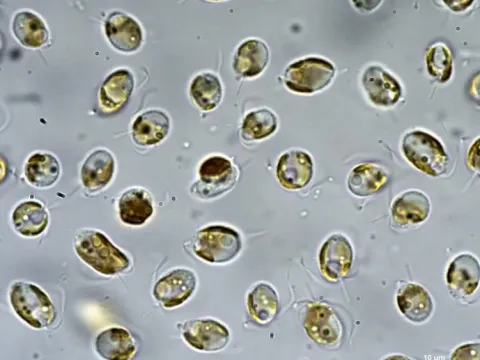
The causative agents of this aquatic condition are species within the order Prymnesiales, with Prymnesium parvum being the most notorious representative in aquaculture.
What the section contains
Prymnesiales
These organisms are microscopic haptophyte flagellates capable of forming dense populations, commonly known as harmful algal blooms (HABs).
They are mixotrophic, meaning they can supplement their nutritional needs through both photosynthesis and the ingestion of organic matter from the environment.
The primary threat is the secretion of potent toxins, known as prymnesins, which target the gill membranes of fish, leading to severe physiological stress or mortality.
In an agricultural context, these organisms pose a significant risk to pond environments, irrigation reservoirs, and commercial fish farming facilities.
The most visible sign of an infestation is a distinct change in water color, which often turns yellow, brownish, or golden due to high cell density.
Affected fish populations exhibit erratic swimming patterns, gasping for air at the surface, and overall loss of equilibrium as they struggle to breathe.
The gills of affected fish often appear pale or damaged under clinical examination, indicating the physical impact of the toxins on their respiration.
In severe cases, large-scale die-offs occur suddenly, as the concentration of prymnesins in the water exceeds the tolerance threshold of the fish species.
- Discolored water
- Erratic fish behavior
- Gill epithelial damage
- Sudden fish mortality
The development of Prymnesiales blooms is heavily driven by eutrophication, which is the enrichment of water with excess nutrients like nitrates and phosphates.
Salinity levels are a critical factor; many of these species thrive in brackish water, making coastal ponds particularly susceptible to their proliferation.
Temperatures between 15°C and 25°C create ideal conditions for rapid cell division, aligning the risk periods with the spring and summer agricultural seasons.
Stagnant or low-flow water systems provide the perfect stability for the algae to increase their density to harmful levels without dilution.
High sunlight exposure provides the necessary energy for the photosynthetic part of their metabolism, accelerating the progression of the bloom.
The primary economic impact is the rapid loss of fish stock, which can cause total failure of an aquaculture harvest within a very short timeframe.
Beyond fish, these toxins negatively impact the overall biodiversity of the pond, decimating zooplankton populations and disrupting established food webs.
The long-term harm involves the degradation of water quality, requiring expensive treatment procedures to restore the pond for future productive use.
There are also risks to livestock if the contaminated water is used for drinking, depending on the concentration and specific type of toxin released.
The unpredictability of blooms forces farmers to invest in constant water quality monitoring, increasing the operational costs of fish farming operations.
Prevention relies on rigorous monitoring of water chemistry, specifically managing nitrogen and phosphorus inputs to minimize the risk of nutrient spikes.
Buffer zones around aquaculture ponds are recommended to prevent agricultural runoff from entering the water and feeding the bloom.
Aeration systems can help improve water quality and provide localized relief for fish during the early stages of a bloom event.
Biological management, including the introduction of natural competitors or filter feeders, can sometimes help regulate the population density of these flagellates.
In extreme cases, controlled use of algaecides may be required, but this must be done with caution to avoid secondary toxicity or ecological damage.