
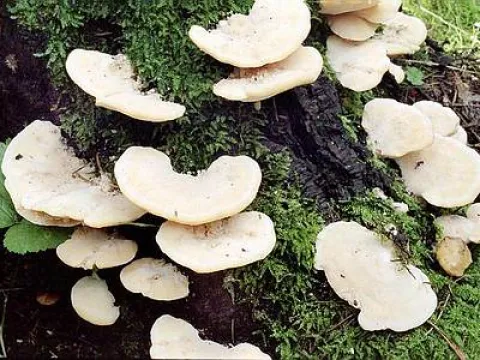
Northern polypore
Polyporus borealis
The causal agent of this disease is the wood-decaying fungus Climacocystis borealis (formerly classified as Polyporus borealis). It belongs to the Fomitopsidaceae family and causes an aggressive white rot in coniferous tree species.
What the section contains
Northern polypore
The fungus acts as both a parasite and a saprotroph, invading living trees with compromised health and continuing to decompose the wood long after the tree has fallen or died.
The fruiting bodies are typically annual, featuring a fleshy, soft texture that eventually becomes brittle and hard. They appear white or pale yellow, often darkening as they age.
Spores are dispersed through the air and water, infecting trees through wounds, frost cracks, or broken branches. The fungus employs specialized enzymes to break down lignin and cellulose.
Biology of the pathogen is highly adapted to the coniferous environment, allowing it to colonize the sapwood and heartwood of various pine and spruce species effectively.
The most evident sign is the formation of fleshy, shelf-like fruiting bodies on the trunk, particularly near the base or on areas damaged by machinery or weather.
Affected wood undergoes significant structural changes, becoming soft, white, and stringy. This decay significantly reduces the structural integrity of the timber.
Crown symptoms often include yellowing of needles and thinning foliage, reflecting the pathogen's interference with the tree's vascular and moisture-transport systems.
Visible signs within the wood include dark zone lines that delineate areas of active decay, which are characteristic of many aggressive white-rot fungi.
Increased vulnerability to windthrow is a critical warning sign; infected trees may snap suddenly during storm events, even if the exterior bark appears relatively intact.
High moisture levels are crucial for the development of Northern polypore, as the fungus requires a humid environment for spore germination and mycelial spread.
The fungus thrives in temperate and boreal climate zones where coniferous hosts are prevalent and conditions allow for sustained vegetative growth.
Mechanical injuries represent the primary entry point for the pathogen. Human-caused wounds, insect galleries, and frost damage provide ideal starting points for colonization.
Dense, poorly managed stands with low air circulation create an ideal microclimate for the pathogen to thrive and spread rapidly between adjacent trees.
Host susceptibility is greatly increased by environmental stressors such as prolonged drought, soil compaction, or high levels of atmospheric pollution.
The primary economic damage caused by this fungus is the destruction of valuable timber, rendering the wood unfit for construction or high-quality wood products.
Ecologically, the fungus disrupts forest health by causing premature death of trees, leading to gaps in the canopy and alterations to the forest composition.
In managed urban or recreational forests, infected trees pose a severe safety hazard to the public due to the risk of unexpected stem failure or tree collapse.
Management costs are significantly increased due to the need for frequent site inspections and the removal of hazardous trees in affected areas.
The loss of mature timber in forest stands reduces the carbon sequestration capacity and overall productivity of the infected forest ecosystem.
Effective management begins with rigorous sanitary practices, which include the prompt identification and removal of infected individuals to reduce the inoculum load.
Forestry operations should be conducted with care to minimize physical damage to standing trees, as wounds serve as primary infection courts for fungal spores.
Maintaining tree vigor through proper stand density management and avoiding soil moisture stress is essential to keeping the trees resistant to initial infection.
In highly sensitive or valuable trees, wound care and the application of tree sealing compounds may prevent the spores from establishing a foothold.
- Regular inspection of forest health.
- Timely removal of infected wood.
- Protection of trunks from mechanical damage.
- Promotion of forest stand health.
- Integrated pest management strategies.