
Platismatia
Platismatia
Platismatia is a genus of foliose lichens that grow on the bark of trees and shrubs. It is not a plant pathogen in the biological sense, as it does not parasitize the host or draw nutrients from the tree's tissues.
What the section contains
Platismatia
As a lichen, it is a stable symbiotic association between a fungus (mycobiont) and algae (photobiont). The tree bark acts purely as a physical substrate for the organism to anchor itself.
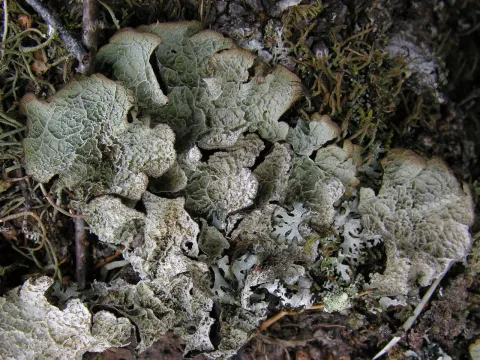
One of the most common species in this genus is Platismatia glauca. It is characterized by a sprawling, greyish-brown or greenish-grey thallus with distinct, curly, or ruffled edges that provide a decorative, albeit sometimes unwanted, appearance.
Since the lichen is photosynthetic and acquires minerals from atmospheric deposits, its presence is more of an indicator of environmental conditions rather than an active infection process.
In forestry and arboriculture, the presence of these lichens is often linked to the vitality of the tree. While not harmful by nature, their dominance suggests that the tree may be experiencing a decline in vigor or growth rate.
The primary sign of Platismatia is the presence of flat or slightly raised, leafy structures attached to the bark of trunks and branches. These structures can be very thin and form extensive, patchy colonies.
When moist, the lichen becomes pliable and takes on a more vibrant colour. During dry weather, the edges of the thallus may curl up, become brittle, and show a lighter underside, which is a classic diagnostic feature of the genus.
The bark beneath a dense colony of Platismatia often remains damp for longer periods than surrounding areas. This moisture retention is a clear visual indicator of the lichen's activity.
While the bark itself typically remains intact, it may appear discoloured or aged where the lichen has established a long-term presence, often because the lichen prevents the natural shedding of outer bark layers.
In advanced cases, the entire surface of a branch might be covered by multiple overlapping colonies, creating a textured, almost scale-like appearance that masks the natural structure of the bark.
Platismatia thrives in environments with high ambient humidity and moderate to cool temperatures. It is frequently found in regions with clean air, as most lichens are highly sensitive to sulfur dioxide and other industrial pollutants.
The development of these lichens is highly dependent on light exposure. Densely crowded tree canopies, which provide deep shade and prevent wind flow, create the stagnant, humid microclimate that these organisms prefer.
Trees with slower bark expansion are more prone to colonization. Fast-growing, young saplings rarely support Platismatia because the bark grows and sheds too rapidly for the lichen to establish a foothold.
Mechanical injuries to the bark, such as frost cracks or sunscald wounds, can act as starting points for spore settlement and colony development.
Proximity to water sources or persistent fog-prone valleys also contributes to the longevity and density of lichen colonies on orchard or ornamental trees.
The main harm associated with Platismatia is the creation of protective niches for pests. Overwintering insects, such as scale insects, mites, and their eggs, often thrive in the crevices between the lichen and the bark.
By covering the bark, the lichen may restrict the breathing of the tree through its lenticels. Although this is rarely fatal, persistent coverage can slightly reduce the efficiency of gas exchange in the stem.
Accumulated moisture under the lichen layer can promote the growth of rot-inducing fungi. While the lichen itself is harmless, it provides the perfect damp environment for true pathogens to colonize the bark surface.
Large amounts of lichen can also hide physical defects such as cankers or early-stage bark damage, making it difficult for an arborist to diagnose more serious problems.
Finally, the added weight of dense lichen growth, especially when saturated with rain, can impose additional stress on weak or damaged branches during winter storms.
Pruning is the most effective preventative measure. By thinning the canopy, you increase light penetration and airflow, which naturally reduces the humidity levels required for Platismatia to flourish.
Mechanical removal is a standard treatment for established colonies. Using a stiff-bristled brush or a blunt scraper to remove the lichen during wet weather is efficient and safe for the bark.
Following mechanical removal, applying a disinfectant such as a copper-based fungicide helps to eliminate remaining spores and prevents immediate re-colonization.
Trunk whitewashing with lime or specialized horticultural paint is a traditional yet effective control method, as the alkaline environment is inhospitable for lichen growth.
- Thinning the canopy to improve air circulation.
- Mechanical cleaning of trunks and branches.
- Applying copper-based fungicidal sprays.
- Whitewashing trunks to change surface pH.
- Improving overall tree nutrition to boost immunity.