
Platismatia glauca
Platismatia glauca
Description
Symptoms
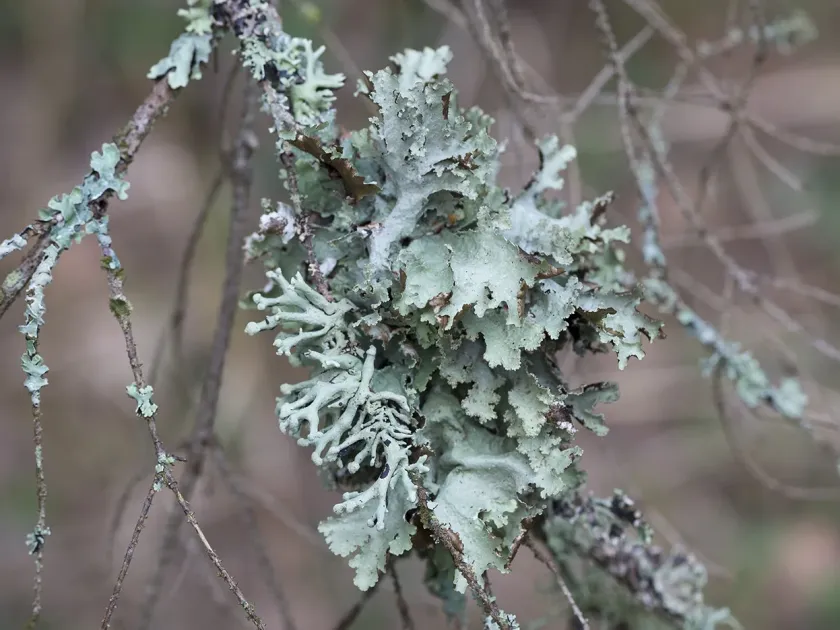
Platismatia glauca appears as a foliose thallus that adheres tightly to the surface of tree bark or rocks. Visually, it resembles dry, ruffled, or wavy plates with a grey-green or glaucous tint.
The margins of the lichen lobes are typically raised, displaying a characteristic undulating shape often tinged with brownish colors. The lower surface of the thallus is smooth and dark, ranging from dark brown to almost black, which helps distinguish it from other local epiphytes.
During dry weather, the lichen becomes brittle and loses its color intensity. After rain or during periods of high atmospheric humidity, it regains its elasticity and becomes more vibrant, making it highly visible on trunks and branches.
In the early stages of colonization, Platismatia exists as small, inconspicuous rosettes. Over time, these rosettes coalesce to form extensive coverings that may encompass significant surface areas of both young and old tree specimens.
A key identifying feature is the presence of soredia on the lobe margins—specialized granular structures used for vegetative reproduction that resemble fine powder. This reproductive strategy allows the lichen to colonize new bark surfaces rapidly.
Pathogen
Platismatia glauca is not a disease-causing pathogen in the traditional sense, as it is not a parasitic fungus but a lichenized fungus living as an epiphyte. It is a symbiotic organism comprised of a fungus (mycobiont) and an alga (phycobiont).
Biologically, it belongs to the kingdom Fungi, specifically the division Lichenes. The fungal component provides structural support and protection for the alga, while the alga synthesizes organic compounds through the process of photosynthesis.
Since the lichen derives its nutrients from the air, precipitation, and dust rather than the tree's sap, it is classified as an obligate epiphyte. It does not penetrate the tree's internal tissues, but merely utilizes the bark as a stable substrate.
Growth is extremely slow, allowing it to exist for decades on the same bark section. In agricultural practice, its presence is frequently misidentified as a symptom of a disease because of the changes it induces in the aesthetic appearance of the bark.
Scientific studies confirm that Platismatia species are sensitive to air quality. Therefore, their widespread presence in orchards often indicates a clean environment rather than poor tree health, serving as a biological indicator of ecological status.
Conditions for development
The primary factor promoting the development of Platismatia glauca is high humidity and moderate temperatures. It actively colonizes orchards located near forests or water bodies, where microclimatic conditions favor the establishment of lichen communities.
This lichen prefers illuminated or semi-shaded sections of trunks where moisture is retained for extended periods. It rarely settles on young shoots with smooth, rapidly expanding bark, choosing instead mature trees with deep cracks and crevices.
Inadequate crown management, specifically the lack of proper ventilation, creates an ideal moist environment for colonization. Overcrowded plantings where air circulation is restricted are the primary habitats for Platismatia spread.
The absence of sanitary pruning and the accumulation of dead bark layers provide a nutrient-rich substrate for lichen spores to attach and germinate. Accumulated dust and organic debris in bark fissures further facilitate the initial colonization process.
In regions with maritime or moist continental climates, Platismatia spreads more rapidly. Low humidity and precipitation are the main limiting factors that restrict the development of this epiphyte in drier geographic zones.
Why it matters
The direct harm caused by Platismatia glauca to the tree is minimal because it does not feed on the host's plant tissues. However, a dense covering of lichen can potentially interfere with gas exchange through lenticels, slightly impeding the respiration of the bark tissues.
The moist environment maintained by the lichen can serve as a refuge for secondary pests, such as scale insects or mites, which hide beneath the lobes. This secondary risk requires monitoring by agronomists to ensure pest populations do not become established.
The presence of large lichen colonies often suggests general tree stress, as healthy, vigorously growing trees continuously shed or expand their bark, making it difficult for the lichen to gain a permanent foothold. Thus, it acts more as an indicator than a direct cause.
The aesthetic value of an orchard decreases during mass infestations. In commercial nurseries, the presence of lichen on saplings may negatively affect their marketability, leading to customer dissatisfaction due to the misconception that the trees are diseased.
When the lichen coverage reaches a critical density, it can create a false impression of poor orchard maintenance. This necessitates additional labor-intensive cleaning tasks, which increases the overall cost of orchard management and maintenance.
Protection
The most effective preventive method is ensuring adequate crown ventilation. Annual sanitary and structural pruning allow sunlight to penetrate the canopy, reducing humidity levels and making the environment unsuitable for lichen establishment.
Mechanical removal of the bark is the most reliable control method. Using specialized scrapers or stiff-bristled brushes on damp trunks allows for the removal of the thalli without causing damage to the living cambium tissues.
Following manual cleaning, whitewashing trunks and skeletal branches with lime wash mixed with copper sulfate is recommended. This creates an inhospitable surface for spore germination and provides a localized disinfectant effect on the bark.
Regular orchard applications of fungicides intended for diseases like scab or moniliasis indirectly inhibit lichen growth. However, applying high-toxicity chemicals specifically for lichen control is generally discouraged.
Maintaining tree vigor through proper irrigation and balanced fertilization is the best way to ensure the bark remains active and elastic. A healthy tree possesses natural physical defenses that resist the colonization of epiphytic lichens.
Discussion
No discussions yet — be the first.